
Meditation Pillow Guide: Find Your Comfy, Steady Seat
We may earn a commission for purchases made using our links. Please see our disclosure to learn more.
You want to meditate, not wrestle your knees, hips, or back. A good meditation pillow gives you a calm, elevated seat so you can breathe deeper, sit longer, and actually look forward to your practice. In this friendly guide, you’ll learn how to choose the right shape, height, and fill (buckwheat, kapok, foam), how to sit without numb legs, plus my top picks—including a quick comparison table.
Affiliate note: I may earn from qualifying purchases at no extra cost to you.
What a meditation pillow actually does
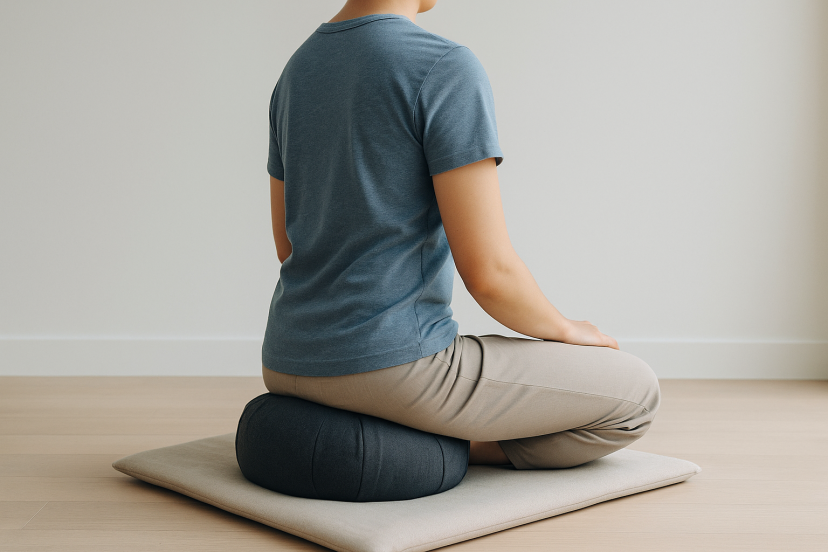
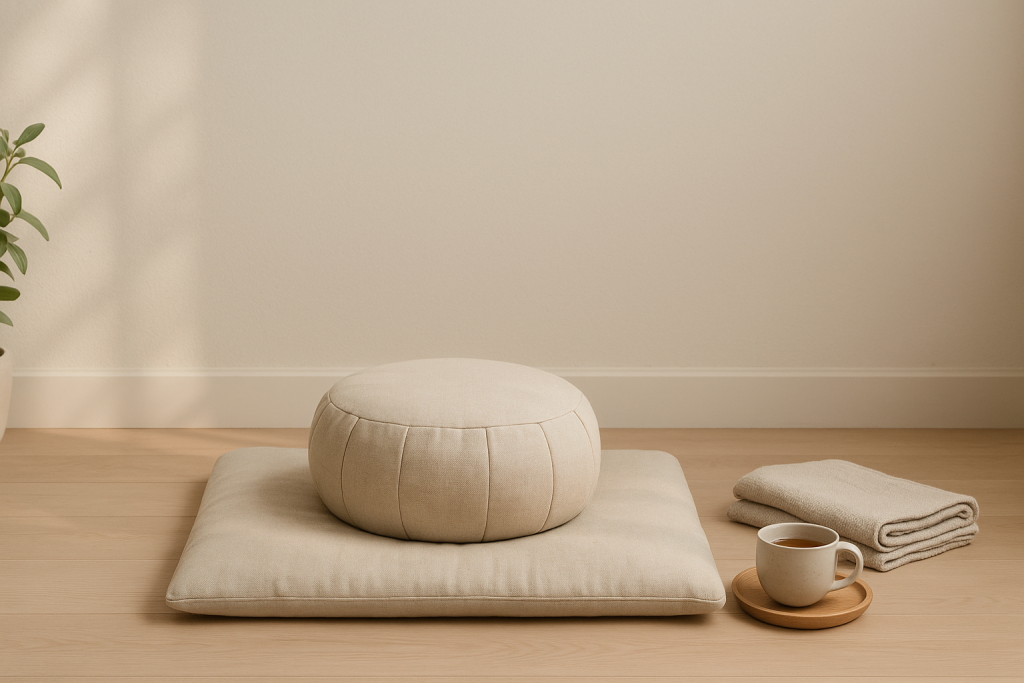
A meditation pillow (often called a zafu) slightly raises your hips above your knees so your spine can stack naturally. That small lift eases strain on your lower back, opens your hips, and gives your ankles a kinder landing zone—especially when you pair the zafu with a zabuton floor mat for extra cushioning under your shins.
Why elevation matters
When your hips are higher than your knees, your pelvis can tilt forward a touch, letting your spine keep its neutral curves. Translation: less slumping, easier breathing, and fewer fidgets.
Quick benefits you’ll feel (and why they matter)
- Longer, steadier sits: Less discomfort = more minutes in the zone.
- Easier breath: Upright posture frees your ribs and diaphragm.
- Reduced tingles: Proper leg support helps circulation to your feet.
- Consistency: When your setup feels inviting, you tend to show up more often (habit loves comfort).
The main types of meditation pillows
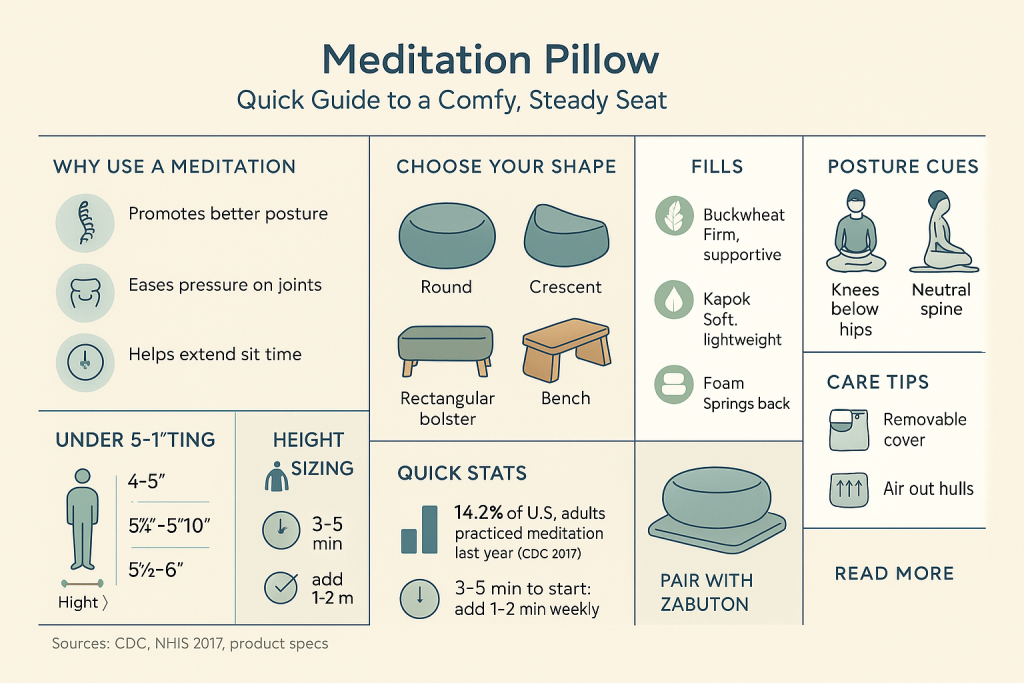
- Round zafu: Classic, stable, great all-rounder.
- Crescent (half-moon): Scoops around your hips; extra room for ankles, great for tight hips.
- Rectangular/yoga bolster: Wider surface; nice for kneeling (seiza) or back support.
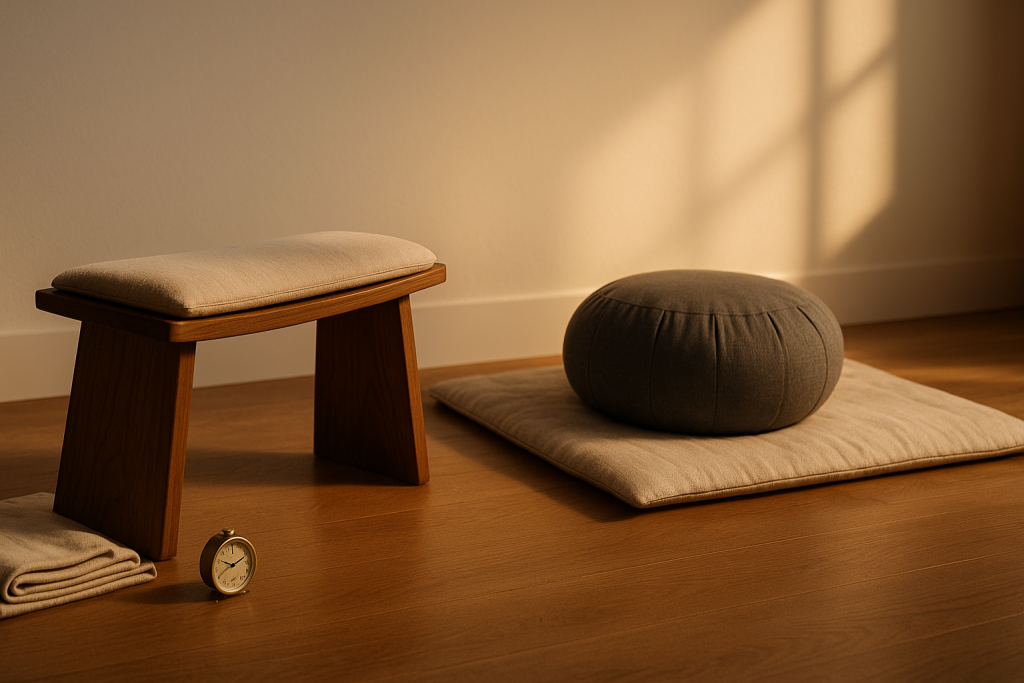
- Meditation bench: For seiza posture without folding your toes; relief for sensitive knees.
Shape & height: matching pillow to your body
Think of shape as the vibe and height as the fit.
- If your hips feel tight, a crescent pillow gives space for ankles and thighs.
- If you want even weight distribution, a round zafu is steady and simple.
- If your knees complain, try a slightly taller pillow (5–6″) or a seiza bench.
Rule of thumb: If your knees sit higher than your hips, go taller. If your low back feels compressed, go a touch lower or remove fill.
Fill materials: buckwheat vs kapok vs foam
- Buckwheat hulls: Moldable, breathable, and adjustable. They feel like a firm beanbag that holds shape.
- Kapok: Lightweight plant fiber—springy but less moldable; lofts high, very light.
- Foam blends: Softer, uniform surface; less adjustable but cushy on sit bones.
Tip: Look for a zippered inner liner so you can add/remove fill to fine-tune height.
Posture 101: sit without numb legs or sore back
- Tip the pelvis forward slightly (your pillow does half the job).
- Stack ribs over hips; imagine a string lifting the crown of your head.
- Relax your shoulders like melting butter; hands rest on thighs or a small support.
- Adjust your leg position: Easy cross-legged, half-lotus, or seiza—choose comfort first.
- Micro-shifts: Tiny posture resets every few minutes keep blood flowing and help you settle.
Sizing guide by height & flexibility
- Under 5’4″ or very flexible: 4–5″ loft often feels great.
- 5’4″–5’10”: 5″ is the sweet spot for most folks.
- Over 5’10” or tighter hips: 5.5–6″ may help keep knees below hips.
- Kneeling fans: A lower cushion or bench supports seiza without ankle strain.
Care, cleaning, and longevity tips
- Choose removable, washable covers (cotton or velvet).
- Air out buckwheat hulls occasionally; replace after a few years if they flatten.
- Keep zippers closed when moving (spilled hulls = confetti you don’t want).
- Store in a dry spot; sunlight occasionally is fine, but avoid dampness.
Common mistakes to avoid
- Sitting too low: Knees higher than hips = instant slump.
- Locking your posture: Stillness shouldn’t mean stiffness—micro-moves are healthy.
- Ignoring ankle comfort: Add a folded towel or a zabuton for pressure relief.
- Chasing “perfect” posture: Aim for comfortable and alert, not statue-still.
Travel and small-space solutions
Short on space? A compact crescent zafu slides under a coffee table or sofa. Traveling? Some cushions have carry handles; others pack flat once you remove some fill. A sturdy yoga bolster can double as a meditation seat and living-room floor pillow.
Budget vs premium: what changes as price climbs
- Budget ($): Solid basics—cotton cover, buckwheat fill, fixed height.
- Mid ($$): Nicer fabrics, better stitching, washable covers, liners with zippers.
- Premium ($$$): Gorgeous textiles, eco-certified materials, matched zabuton sets, and refined ergonomics.
Rituals & ambiance: make the habit stick
Create a tiny ritual before you sit: a sip of tea, a breath, a candle. If you love seasonal energy, try a reflective moment inspired by mindful seasonal traditions like this Samhain reflection ritual—it’s a beautiful way to honor change and set intentions for your practice (see this gentle guide on seasonal Samhain ritual practices).
🔹 Top Picks: Best Meditation Pillows on Amazon
Below are five well-loved options sold on Amazon. I’ve included highlights, who they suit best, and quick pros/cons to help you decide fast.
1) Mindful & Modern Large Crescent Meditation Cushion
Why you’ll like it: Crescent shape cradles your hips; adjustable buckwheat hulls; removable cover. A balanced, modern look that fits most decor.
Best for: Beginners to intermediate sitters, small spaces, anyone who wants ankle room.
Features: Crescent design, zippered inner liner, washable cover; 1-Year Warranty noted by the brand.
Pros: Adjustable loft; stylish fabric options; supportive yet moldable.
Cons: Crescent shape is slightly narrower than a round zafu for some body types.
Review snapshot: Fans praise posture support and aesthetics; a few note they removed a bit of fill for perfect height.

2) Florensi Meditation Cushion (Round, Velvet Cover)
Why you’ll like it: Plush velvet cover + buckwheat/foam combo for soft-on-top, firm-underneath feel; 16″ x 5″ size suits many sitters.
Best for: Comfort-seekers who like a softer top surface and luxe texture.
Features: 16″ diameter, 5″ loft, removable machine-washable cover; adjustable buckwheat fill.
Pros: Cozy fabric; easy-care cover; supportive core.
Cons: Velvet attracts dust/lint; heavier than kapok cushions.
Review snapshot: Users love the “soft-meets-stable” feel; occasional notes about lint with darker colors.

3) Hugger Mugger Zafu Meditation Cushion (Round)
Why you’ll like it: A yoga-studio staple—durable fabric, organic buckwheat fill, made in the USA; time-tested quality.
Best for: Traditionalists who want a classic round zafu with a firm, even seat.
Features: Approx. 15″ x 5″, organic buckwheat hulls, carry handle; info on dimensions and materials available from the brand.
Pros: Sturdy, supportive, adjustable fill; trusted brand heritage.
Cons: Heavier than kapok; looks utilitarian vs. plush.
Warranty/returns: Some retailers note a 1-year warranty; check seller details if buying on Amazon.

4) Retrospec Sedona Zafu Meditation Cushion
Why you’ll like it: Round or crescent options; cotton cover; adjustable buckwheat; approachable price point; One-Year Limited Warranty listed on Amazon.
Best for: Budget-friendly shoppers who still want adjustability and a clean design.
Features: Washable cover, carry handle, buckwheat fill.
Pros: Solid value; multiple shapes; easy to fine-tune.
Cons: Fabric feels basic compared to premium textiles.
Review snapshot: Buyers appreciate quality-for-price and simple setup; some mention a break-in period as hulls settle.

5) Waterglider International Crescent Meditation Cushion
Why you’ll like it: USA-grown buckwheat hulls; organic-cotton covers; thoughtful construction from a cushion-focused brand.
Best for: Eco-minded meditators who want a crescent fit and made-in-USA materials.
Features: Organic-cotton cover, buckwheat hull fill; model and size options vary.
Pros: Sustainable materials; crescent comfort; supportive feel.
Cons: Warranty details vary by marketplace; fabric colors sell out.

Comparison table (quick scan)
| Model | Key Spec(s) | Warranty | Approx Price/Tier | Best For |
| Mindful & Modern Crescent | Crescent; buckwheat; washable cover | 1-Year brand warranty | $$ | Beginners, ankle room, small spaces |
| Florensi Round Velvet | 16″ x 5″; buckwheat + foam; velvet cover | 30-day returns on Amazon (warranty not listed) | $$ | Comfort + plush feel |
| Hugger Mugger Zafu | 15″ x 5″; organic buckwheat; made in USA | Some retailers cite 1-year | $$$ | Traditionalists; studio-grade build |
| Retrospec Sedona Zafu | Buckwheat; removable cotton cover | One-Year Limited | $–$$ | Value seekers; round or crescent choice |
| Waterglider Crescent | Organic-cotton cover; USA buckwheat | Not specified/varies | $$ | Eco-minded, crescent comfort |
Approximate tiers: $ (<$45), $$ ($45–$70), $$$ (>$70). Prices and availability can change.
🧪 Research-backed insights: comfort, pain, and adherence
- Cushion thickness affects stability and trunk muscle activity. A 2024 peer-reviewed study comparing floor-sitting on cushions of different thicknesses (3, 5, and 8 cm) found measurable differences in postural stability and trunk muscle activation across cross-legged and kneeling postures—evidence that the right cushion height supports a steadier, more comfortable sit. Read the study’s findings here: floor-cushion thickness and postural stability (2024)
- Dynamic seating that encourages micro-movements can reduce back and neck pain. In a 2024 randomized study of office workers, a dynamic seat cushion that promoted gentle postural shifts significantly reduced the incidence of neck and low-back pain over six months. While your meditation pillow isn’t “dynamic,” the takeaway is clear: small, regular adjustments help. See the dynamic cushion RCT (2024).
Context note: Other research shows prolonged cross-legged sitting without support can tilt the pelvis and increase trunk flexion—both linked with discomfort—underscoring why a supportive seat matters for long sits.
FAQs about meditation pillows
How high should my meditation pillow be?
Aim for a height that lets your knees rest below your hips. Many people start around 5″. If you feel low-back rounding or knee strain, add a little fill or choose a taller pillow.
Is a crescent or round zafu better?
Crescent shapes free ankle space and hug the hips—great if you’re tight in the hips. Round zafus feel uniformly stable and are a safe all-purpose pick. Comfort first; there’s no one “right” answer.
Do I need a zabuton mat too?
Not mandatory, but a zabuton spreads pressure under your shins and ankles. If you get tingles or sore ankles, a mat or folded blanket can be a game-changer.
Buckwheat vs kapok—what should I choose?
Buckwheat hulls mold to you and are easily adjustable. Kapok is lighter and springier but less shapable. If you like a firm, custom feel, go buckwheat. If you prefer feather-light loft, try kapok.
Can I use a chair for meditation?
Absolutely. If a floor meditation cushion isn’t comfortable today, use a chair and place a small pillow or folded towel under your sit bones to tip the pelvis forward. Consistency > aesthetics.
Conclusion
Your meditation time is precious. The right meditation pillow doesn’t just “look zen”—it helps your body relax so your mind can follow. Choose a shape that fits your hips, a height that frees your knees, and a fill that feels like home. Start with five minutes, breathe, and let your new cushion become the little ritual that nudges you back to yourself—day after day.