Best Organic Essential Oils for Home & Body
We may earn a commission for purchases made using our links. Please see our disclosure to learn more.
You love the idea of making your home smell fresh, your skin glow a little brighter, and your evenings feel calmer—but you don’t want mystery ingredients or overblown promises. Same. That’s why organic essential oils have become my go-to: they’re simple, concentrated plant extracts you can use for diffuser blends, DIY skincare, cleaning, and more—while choosing products grown and processed to certified organic standards.
By the end of this guide, you’ll know how to shop confidently, use oils safely, and pick a few organic essential oils that fit your budget and goals. (Heads-up: this article includes product picks. If you buy through recommendations, we may earn a small commission—at no extra cost to you.)
What “organic essential oils” really mean
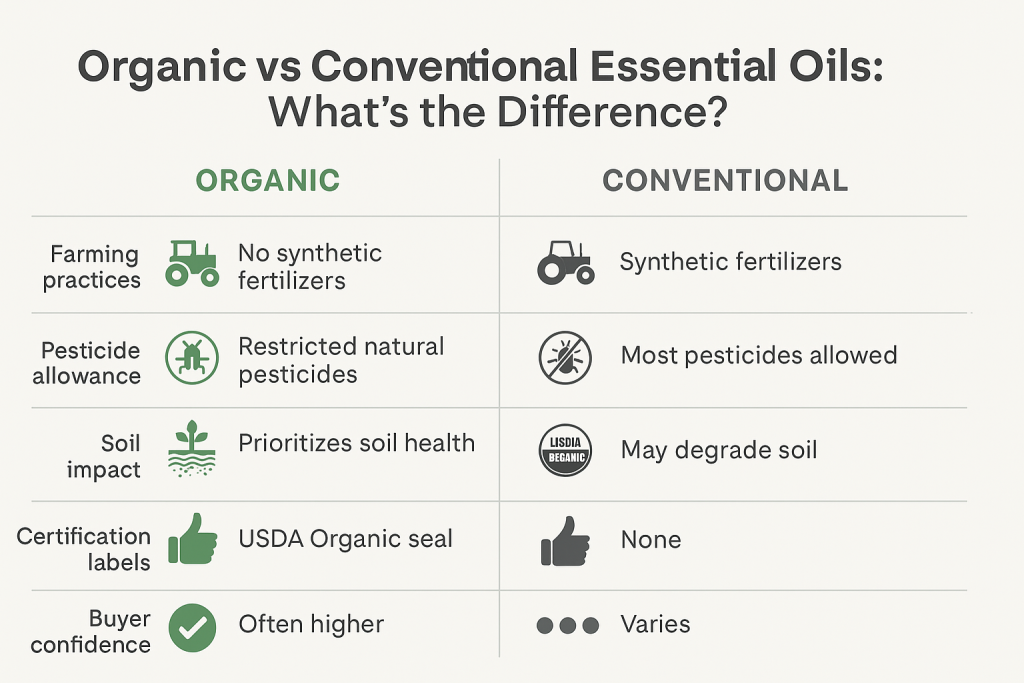
“Organic” isn’t just a feel-good label. In the U.S., USDA Organic certification means plants are grown and processed without most synthetic pesticides or fertilizers and with practices that protect soil and biodiversity. For essential oils, this certification applies to the plant material and how it’s handled—so you’re prioritizing cleaner inputs and traceable sourcing.
Look for: “USDA Organic,” organic seals on the box/bottle, and batch testing (GC–MS) from reputable brands.
The real-life benefits (minus the fluff)
People use organic essential oils for:
- Aromatherapy & mood support: uplifting citrus in the morning, grounding resinous notes at night.
- Topical routines: when diluted with carrier oils, some oils support skin clarity, comfort, or a sense of relaxation.
- Home care: freshen the air, add brightness to natural cleaners, or lightly scent laundry (again, always dilute).
You’ll see claims everywhere, so we’ll stick to uses that are common-sense, enjoyable, and supported by at least some clinical or mechanistic research (more on the science below).
How to pick quality: a 60-second checklist
- Certification: USDA Organic seal (or equivalent) on singles/sets.
- Testing: Brands that publish or mention third-party GC–MS testing.
- Botanical name: e.g., Lavandula angustifolia (lavender).
- Packaging: Amber/dark glass with tight caps and orifice reducer.
- Supply chain: Country of origin stated; clear ingredient list (single-ingredient oil, no fillers).
Safety first: dilution, kids & pets
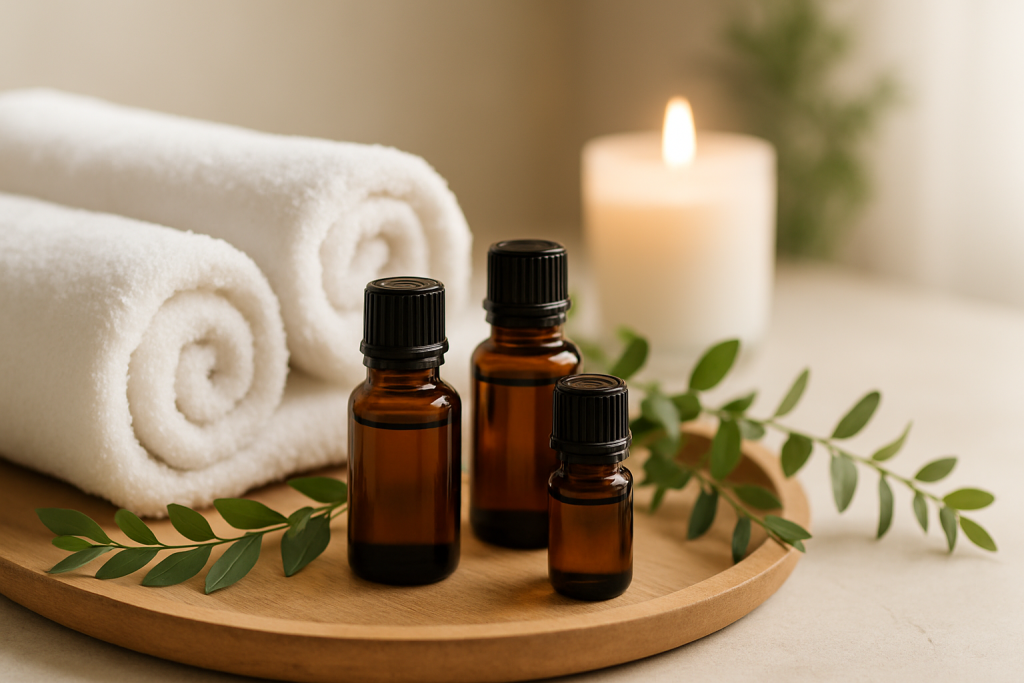
- Dilute for skin: start around 1% (≈ 1 drop EO per 5 ml/1 tsp carrier). Sensitive areas? Go lower.
- Spot test: patch test before broader use.
- Photosensitivity: citrus (like lemon, orange) can increase sun sensitivity—avoid sun exposure on treated skin for 12–24 hours.
- Pregnant/breastfeeding, kids, pets, medical conditions: talk to a professional first.
- Never ingest oils unless specifically guided by a qualified clinician.
Starter oils I recommend (with quick wins)
Lavender (Lavandula angustifolia)
- Why people love it: versatile, calm-leaning aroma for evening routines.
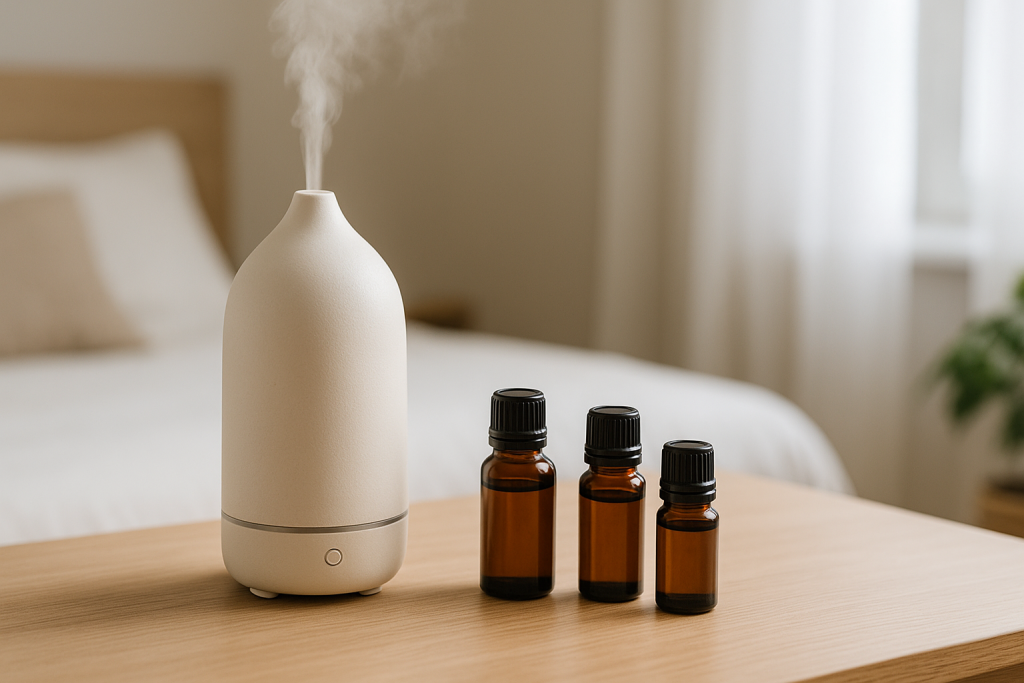
- Try it: 2–4 drops in a bedroom diffuser; or 1% in jojoba as a post-shower body oil.
Peppermint (Mentha × piperita)
- Why people love it: crisp, cooling; great for mid-day focus in a diffuser.
- Try it: 1–2 drops with sweet orange for an energizing “work block” blend.
Tea Tree (Melaleuca alternifolia)
- Why people love it: clarifying, “clean” aroma; popular in DIY cleaning and targeted skincare when properly diluted.
- Try it: a tiny amount in a carrier for spot-care; or in an all-purpose spray for counters.
Lemon (Citrus limon)
- Why people love it: bright, happy; pairs well with eucalyptus or rosemary.
- Try it: add to DIY surface cleaner (in proper dilution) or a morning diffuser blend.
- Note: photosensitive—don’t apply to sun-exposed skin.
Frankincense (Boswellia spp.)
- Why people love it: resinous, grounding aroma for meditation and evening wind-down.
- Try it: 1 drop with lavender in a pre-sleep diffuser.
Everyday uses at home (air, skin, cleaning)
- Air: 3–6 drops in a diffuser for a small room; crack a window for airflow.
- Skin: mix it with jojoba, fractionated coconut, or sweet almond oil.
- Cleaning: mix in vinegar/water formulas or castile-based soaps (test surfaces first).
Skincare basics: blend with the right carrier oil
- Dry skin: jojoba, argan, rosehip.
- Oily/combination: grapeseed, squalane.
- Body: fractionated coconut or sweet almond.
A tiny essential-oil percentage goes a long way—focus on comfort and consistency.
Mood, focus & energy: simple diffuser blends
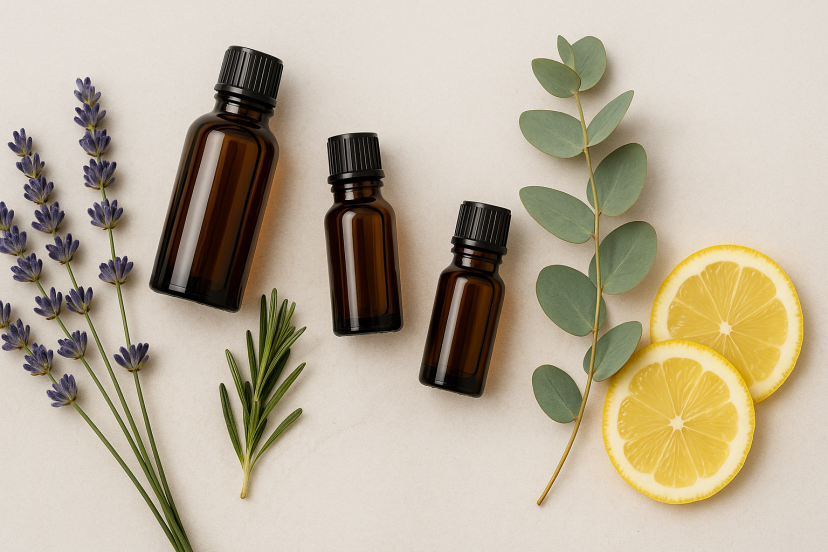
- Clear & Bright: lemon + rosemary + a breath of eucalyptus.
- Focus Sprint: peppermint + orange.
- Cozy Evening: lavender + frankincense + a whisper of cedarwood.
Sleep & stress: bedtime rituals that stick
Pair a warm bath, low lights, and two drops of lavender in a bedside diffuser. Keep screens out of the room. A ritual that’s easy to repeat works better than any “perfect” blend.
Cultural rituals & mindful use
Aromatics have long accompanied reflection across cultures—from steam tents to quiet evening prayers. If you’re exploring the emotional side of your routine, you might enjoy these guided shadow work rituals as a reflective companion to your evening diffuser time.
Sourcing, certifications & storage basics
- Read labels for botanical names and origin.
- Choose certified organic when it matters to you (and your environment).
- Store smart: cool, dark cupboard; caps tight; keep droppers clean. Most citrus oils have shorter shelf lives (use them within ~1 year for best aroma).
🔹Our Amazon picks: 5 organic essential oils worth your cart
Below are five organic essential oils (and sets) that balance quality, value, and availability. I’ve included quick use-cases plus “review snapshots” so you know what real buyers tend to praise (and where complaints pop up).
1) Plant Therapy Top 6 USDA Organic Essential Oil Set (6 × 10 mL)
What it is: A starter set with lavender, peppermint, eucalyptus, lemon, tea tree, and sweet orange—USDA Organic, with third-party GC–MS testing.
Features: 100% pure singles, undiluted; popular, versatile oils; reputable brand.
Pros: Great variety per dollar; strong education/testing culture.
Cons: Small 10 mL bottles; scents may run out at different speeds.
Best for: New users who want a solid, organic foundation.
2) Cliganic Organic Aromatherapy Essential Oils Gift Set (Top 8)
What it is: Eight USDA Organic singles (peppermint, lavender, eucalyptus, tea tree, lemongrass, rosemary, frankincense, orange).
Features: Certified organic, non-GMO verified, vegan; third-party purity testing.
Pros: Wide scent range; clear labeling; strong value for sets.
Cons: Mixed preferences on scent intensity across oils in a set.
Best for: Diffuser lovers who want an affordable organic spectrum.
3) US Organic Tea Tree Essential Oil (10 mL)
What it is: A focused, USDA Organic, steam-distilled tea tree (South Africa origin often cited).
Features: Single-ingredient, undiluted; popular for diluted skin/hair uses and DIY cleaning.
Pros: Targeted, “workhorse” oil; small size minimizes waste.
Cons: Sharp aroma for some; needs careful dilution.
Best for: Clarifying blends and surface sprays.
4) NOW Essential Oils, Organic Orange Oil (1 oz)
What it is: Cold-pressed USDA Organic sweet orange—bright, cheerful citrus.
Features: 100% pure; vegan; child-resistant cap.
Pros: Great value for size; uplifting scent loved for kitchens and offices.
Cons: Phototoxic risk if applied to skin before sun; scent fades faster than woods/resins.
Best for: Morning diffuser blends and natural cleaning.
5) Handcraft Blends Organic Lemon Essential Oil (1 oz)
What it is: USDA Organic lemon with third-party testing noted by the brand.
Features: Bright, classic citrus; dropper cap.
Pros: Budget-friendly; strong “clean house” vibe.
Cons: Same phototoxic caution; some reports of tricky droppers.
Best for: Freshening cleaners and energizing daytime blends.
Quick comparison
| Model | Key Spec(s) | Warranty | Approx Price/Tier | Best For |
| Plant Therapy Top 6 Organic Set | 6 × 10 mL singles; GC–MS tested | Not specified; Amazon return window applies | Mid | New users; gifting |
| Cliganic Top 8 Organic Set | 8 organic singles | “Free returns” shown on listing; see details | Budget–Mid | Diffusers; variety |
| US Organic Tea Tree (10 mL) | USDA Organic, steam-distilled | Not specified; see listing | Budget | Targeted skin/cleaning (diluted) |
| NOW Organic Orange (1 oz) | Cold-pressed citrus | Not specified; see listing | Budget | Uplift; cleaning |
| Handcraft Organic Lemon (1 oz) | USDA Organic; third-party tested | Not specified; see listing | Budget | Fresh home; DIY cleaners |
Tip: Prices and return terms change—always check the current listing before you buy.
🧪 Research-backed insights (what science says)
- Lavender & anxiety/sleep: A 2019 systematic review found oral lavender oil preparations (like Silexan) and lavender massage aromatherapy were associated with reduced anxiety scores in clinical samples. This supports lavender’s calming reputation, especially as part of a wider routine (sleep hygiene, stress management).
- Tea tree & microbes: A widely cited review in Clinical Microbiology Reviews summarizes antimicrobial and anti-inflammatory properties of tea tree oil and its components, while also outlining toxicity considerations. That’s why proper dilution and skin testing matter.
Some findings look encouraging, while others are still unclear. Use organic essential oils as supportive tools—not stand-alone medical treatments—and consult a professional for specific conditions.
FAQs
Are organic essential oils “stronger” than conventional oils?
Not necessarily. “Organic” speaks to farming/handling standards, not potency. But many people prefer organic to reduce potential pesticide residues and to support eco-friendly agriculture.
Is it safe to put organic essential oils straight onto your skin?
Stick with dilution. For most adults, 1% is a sensible starting point (≈ 1 drop per 5 ml carrier). Sensitive skin, kids, and facial applications usually call for even lower dilutions.
Which organic essential oils are safest for beginners?
Lavender and sweet orange are beginner-friendly for diffusers. For skin, keep everything diluted and do a patch test. Avoid phototoxic citrus before sun.
What’s the best carrier oil to start with?
Jojoba is a crowd-pleaser because it mimics skin’s natural lipids and absorbs well. Fractionated coconut is light for body oils; grapeseed is nice for combination skin.
How long do oils last?
Most oils keep well 1–3 years if stored cool, dark, and capped tightly. Citrus oils oxidize faster—use them sooner and watch for scent changes.
Final thoughts (gentle nudge)
Start small. Choose two or three organic essential oils you’ll actually use, build a simple ritual (a diffuser at breakfast, a quiet blend at bedtime), and let the habit—not hype—do the heavy lifting. Your home will smell lovely, your routines will feel calmer, and your choices will support cleaner sourcing.