Mandala Meditation for Focus and Relaxation
We may earn a commission for purchases made using our links. Please see our disclosure to learn more.
Some days, your mind feels like a browser with 37 tabs open, three of them playing music, and none of them labeled. That is where mandala meditation can feel surprisingly grounding.
Instead of forcing your thoughts to go quiet, this practice gives your attention somewhere gentle to land. You focus on a circular design, trace patterns with your eyes, color slowly, breathe with intention, or create your own mandala as a form of mindful reflection.
In this guide, you’ll learn what mandala meditation means, how to practice it, how it may support focus and relaxation, what research says, and which simple tools can help you begin.
Affiliate disclosure: This article includes product suggestions, and I may earn from qualifying purchases at no extra cost to you.
What Is Mandala Meditation?
Mandala meditation is a mindfulness practice that uses a mandala as a visual focus point. A mandala is usually a circular design with repeating patterns, symbols, shapes, or colors arranged around a center.
During the practice, you may look at a mandala, color one, draw one, or simply imagine one in your mind. Creating flawless art is not the goal. Bringing your focus back to the present is the objective.
Think of the mandala as a quiet little anchor. When your mind drifts, you come back to the center.
The Spiritual Meaning Behind Mandalas
Mandalas have deep roots in several spiritual and artistic traditions, especially Buddhism and Hinduism. The Metropolitan Museum of Art describes a mandala in Tibetan Buddhist art as a diagram of the universe and a map used to conceptualize a path toward enlightenment.
That does not mean every modern mandala practice has to be formal or religious. Many people use mandalas today for mindfulness, creative expression, prayer, journaling, or emotional reset.
A respectful approach matters. If you are borrowing from traditions outside your own, treat the practice with curiosity, humility, and care.
How Mandala Meditation Supports Focus
Focus is not about clenching your brain like a fist. It more looks like training a puppy. You repeatedly bring it back with gentleness.
Mandala meditation gives your attention a pattern to follow. The repeated shapes, circles, and symmetry can make it easier to settle into one task.
You might use it before writing, studying, praying, creating, or making a decision. Even five quiet minutes can help you shift from scattered to centered.
How Mandala Meditation Helps Relaxation
Relaxation often starts when your nervous system gets a signal that you are safe enough to slow down. Mandala meditation can create that signal through rhythm, repetition, and breath.
You color one small section. You breathe. You notice the shape. You choose the next color. Nothing dramatic. Nothing fancy.
That simple rhythm can feel like sweeping a messy room in your mind.
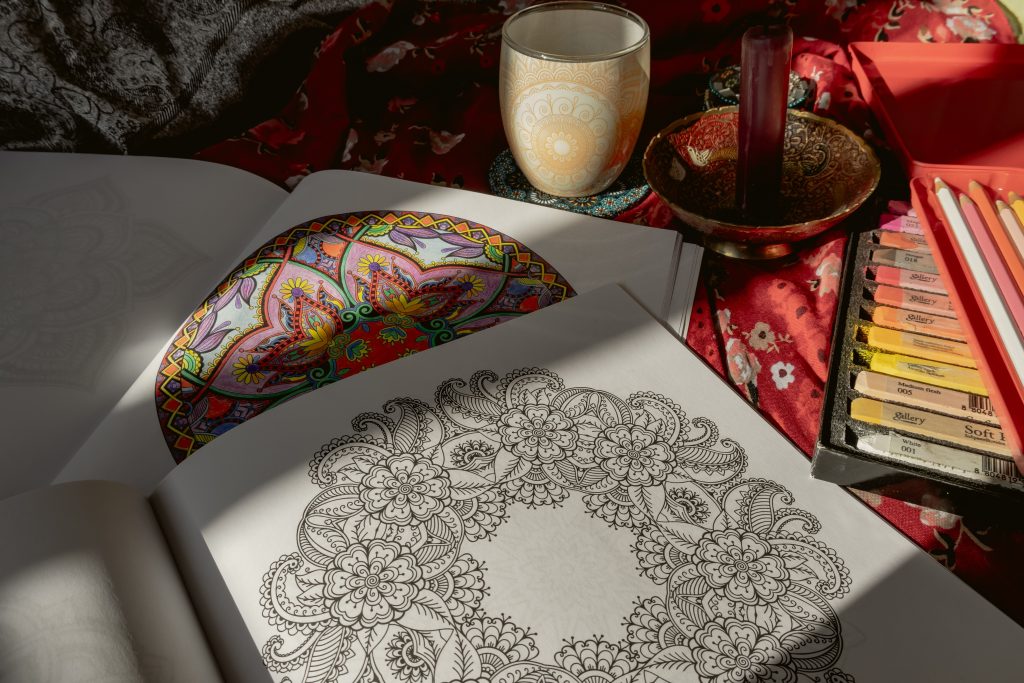
Different Ways to Practice Mandala Meditation
There is no single “right” way to practice. That is good news if you are not the sit-still-and-levitate type.
You can try:
- Gazing at a printed mandala
- Coloring a mandala slowly
- Drawing one from the center outward
- Visualizing a glowing circle during meditation
- Journaling after the practice
- Placing a mandala near your spiritual space
If you already have a quiet reflection area, you can pair this practice with meaningful objects, candles, crystals, prayer beads, or other spiritual altar ideas that help you feel grounded.
How to Start a Simple Mandala Meditation Practice
Begin small. Ten minutes is enough.
Sit comfortably and place a mandala in front of you. Take three slow breaths. Let your eyes rest on the center of the design.
Then gently follow the patterns outward. Notice lines, curves, colors, and spaces. When your thoughts wander, kindly return to the center.
No scolding. No “I’m bad at meditation.” Wandering is part of the practice.
Choosing the Right Mandala for Your Mood
Different mandalas create different feelings. A simple black-and-white design may feel calming. A colorful, detailed mandala may feel energizing.
Ask yourself:
- Do I want peace or creativity?
- Do I feel overstimulated or dull?
- Do I need grounding or inspiration?
For deep relaxation, choose softer shapes and fewer details. For focus, choose a balanced design with clear repeating patterns.
Using Breath With Mandala Meditation
Breath turns mandala meditation from “looking at a pretty circle” into a deeper mindfulness practice.
Try this:
Center Breath
Look at the center of the mandala. Take a four-count breath. Breathe out for six counts. Repeat for a few minutes.
Pattern Breath
Follow one ring of the mandala with your eyes. Inhale as your gaze moves halfway around. Exhale as it completes the circle.
Color Breath
Choose one color in the design. Each time you see it, take a slow breath and relax your shoulders.
Simple? Yes. Surprisingly effective? Also yes.
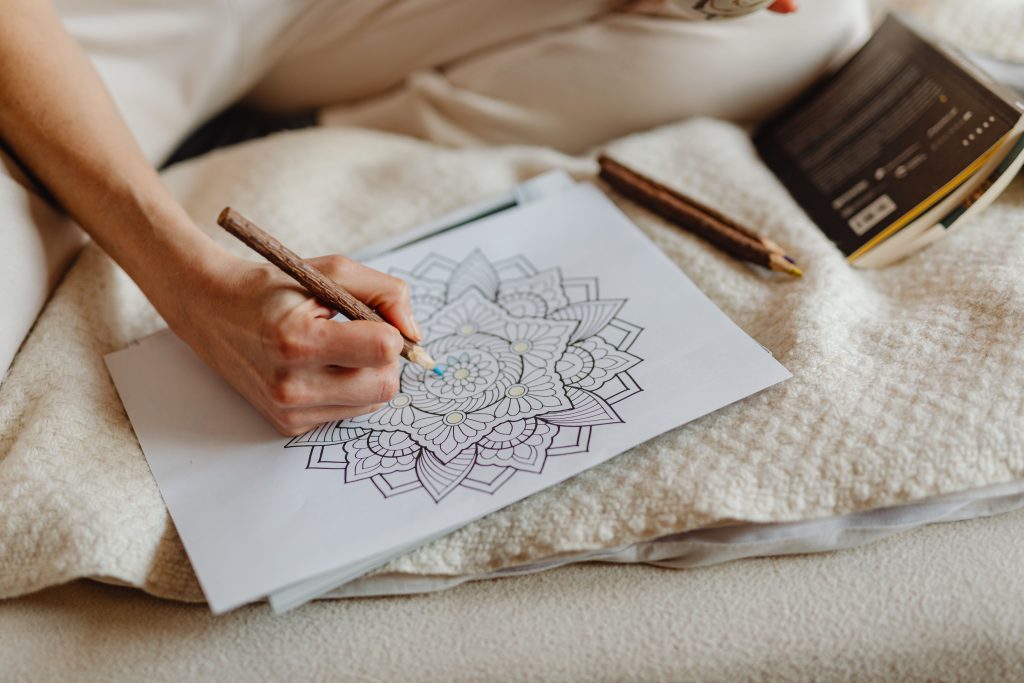
Coloring Mandalas as Mindful Art
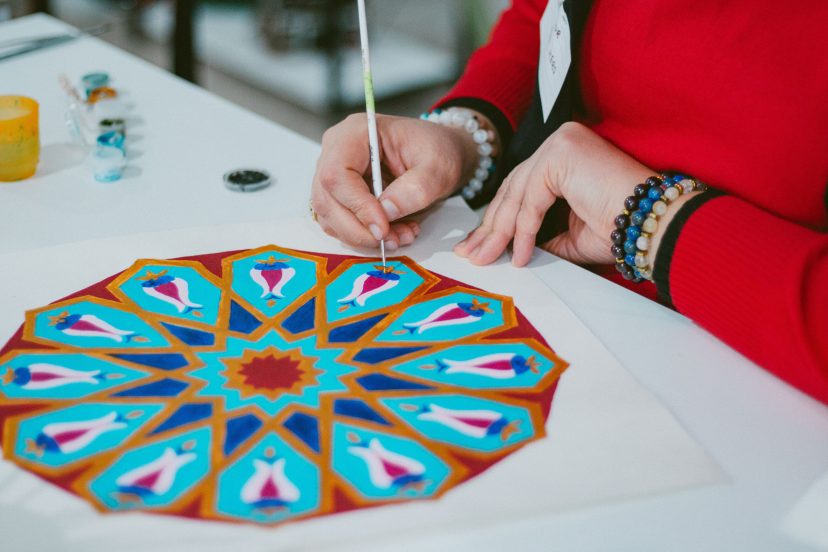
Mandala coloring is one of the easiest ways to begin. You do not need art skills. You only need a page, a few colors, and a willingness to go slowly.
Instead of rushing to finish, treat each section as one breath-sized moment. Pick colors based on feeling, not perfection.
Red may feel energizing. Blue may feel peaceful. Yellow may feel hopeful. Or maybe you just like purple today. That counts too.
Creating Your Own Mandala
Drawing your own mandala can feel personal and powerful. Start with a dot in the center of a page. Add circles, petals, lines, or symbols around it.
You can use a ruler and compass, but you do not have to. A slightly uneven handmade mandala often feels more alive than a perfect one.
Try adding symbols that matter to you, such as waves for healing, leaves for growth, stars for guidance, or small hearts for compassion.
Mandala Meditation for Spiritual Reflection
Mandala meditation can become a gentle spiritual check-in. Before you begin, ask a question such as:
- What am I ready to release?
- What needs my attention?
- What kind of energy do I want to carry today?
- Where do I feel like I’m not connected to myself?
Then meditate, color, or draw without forcing an answer. Sometimes insight arrives quietly, like someone slipping a note under the door.
Research-Backed Benefits of Mandala Practice
Research on mandalas is promising but still mixed, so it is best to stay grounded.
A 2021 study on mindfulness-based mandala coloring in nature found positive effects among 36 people with chronic widespread musculoskeletal pain. The practice was connected with improvements in pain-related and psychological measures. You can read the open-access study here: mindfulness-based mandala coloring research.
However, a 2022 meta-analysis of eight studies with 578 adult participants found that mandala coloring did not reduce state anxiety significantly more than free drawing. That does not make mandalas useless. It simply means the calming effect may come from mindful creative engagement, not the mandala alone. Here is the review: mandala coloring and state anxiety meta-analysis.
In plain English: mandala meditation can be helpful, but it is not magic glitter in circle form. Use it as a supportive practice, not a replacement for medical or mental health care.
Common Beginner Mistakes to Avoid
The biggest mistake is trying too hard. Mandala meditation works best when you let it be simple.
Avoid these common traps:
- Trying to make the design perfect
- Judging your color choices
- Expecting instant peace
- Practicing only when you are already overwhelmed
- Comparing your mandala to someone else’s
Your mandala does not need to impress anyone. It just needs to help you in getting back to who you are.
5 Amazon Products for Mandala Meditation
Here are five relevant Amazon product options that can support a mandala meditation routine.
1. Mandala Meditation Coloring Book: Serene Coloring
This book includes 92 mandalas for coloring, making it a strong choice for beginners who want plenty of designs in one place.
Features: Printed mandala pages, calming patterns, beginner-friendly format.
Best for: Adults who want a simple, screen-free relaxation practice.
2. The Mindfulness Coloring Book: Relaxing, Anti-Stress Art Therapy for Busy People
This pocket-size coloring book includes 100 pages designed for quick creative breaks.
Features: Compact size, anti-stress coloring format, easy to carry.
Best for: Busy readers, travelers, students, and anyone who wants short mindful pauses.
3. Soucolor 72 Colored Pencils Set
A good pencil set makes mandala coloring smoother and more enjoyable. The Soucolor 72 Colored Pencils Set is listed for adult coloring, blending, shading, sketching, and drawing.
Features: 72 colors, smooth application, blending and shading use.
Best for: People who want richer color choices without getting too complicated.
4. SATNAM 5″ Gold Tibetan Meditation Yoga Singing Bowl
This hand-hammered singing bowl comes with a wooden striker and is marketed for meditation, yoga, mindfulness, and sound practice.
Features: Brass bowl, striker included, long-lasting sound.
Best for: Anyone who likes beginning or ending meditation with sound.
5. Mudra Crafts Brass Copper Offering Bowl Set of 7
This set can be used for decorating a meditation area, altar, or ritual space. The bowls are described as lightweight, sturdy, and suitable for offerings, incense, herbs, flowers, crystals, or decorative use.
Features: Set of seven bowls, brass-copper alloy, altar-friendly size.
Best for: Spiritual practitioners building a peaceful meditation corner.
How to Build a Mandala Meditation Routine
A routine does not need to be intense. In reality, you are more likely to continue doing something if it is simple.
Try this weekly rhythm:
- Monday: 5-minute mandala gazing
- Wednesday: 10-minute coloring session
- Friday: Draw a small mandala and journal after
- Sunday: Reflect on one theme, such as peace, courage, or release
Keep your supplies visible. A mandala book buried in a drawer will become drawer decor. Very peaceful, but not very useful.
How Long Should Mandala Meditation Take?
Start with 5 to 10 minutes. That is enough to build familiarity without making the practice feel like homework.
If you enjoy it, extend it to 20 or 30 minutes. Longer sessions work well for coloring, spiritual reflection, or creative journaling.
The best length is the one you will actually repeat.
FAQs About Mandala Meditation
Is mandala meditation good for beginners?
Yes. Mandala meditation is beginner-friendly because it gives your mind a clear visual focus. You do not have to empty your thoughts. You simply return your attention to the pattern.
Do I have to be spiritual to practice mandala meditation?
No. Some people use mandalas spiritually, while others use them for relaxation, mindfulness, art therapy, or focus. You can adapt the practice to your beliefs and comfort level.
Can I use mandala coloring as meditation?
Yes. Mandala coloring can become meditation when you slow down, breathe, notice the shapes, and stay present with the process instead of rushing to finish.
What is the best time to do mandala meditation?
Morning is helpful for setting intention, while evening is great for unwinding. You can also use it during stressful breaks when your mind feels scattered.
How often should I practice mandala meditation?
A reasonable place to start would be two or four times a week. Even short sessions can help you build a calmer rhythm if you practice consistently.
Conclusion
Mandala meditation is a simple, beautiful way to bring your attention back to the present. Whether you gaze at a sacred geometry design, color a page, draw your own pattern, or use a mandala in spiritual reflection, the heart of the practice is the same: return to the center.
You do not need perfect stillness, expensive tools, or an artist’s hand. All you need is the will to start and a few calm minutes.
So choose a mandala, take a breath, and let the circle remind you that you can always come back to yourself.