Best Meditation Bench: How to Choose a Comfortable Seat for Your Practice
We may earn a commission for purchases made using our links. Please see our disclosure to learn more.
A meditation bench can make kneeling practice feel more stable by lifting your hips and reducing the need to fold your legs tightly. The wrong height, angle, or padding can leave you shifting around instead of settling into your breath. Choosing well involves more than appearance, especially when similar designs sound almost interchangeable.
This guide will help you compare bench styles, materials, portability, cushioning, and fit. You will also find five options for different needs, plus setup advice and research-backed context. By the end, you should know whether a meditation bench suits your body and which features deserve your attention.
What a Meditation Bench Actually Does
A meditation bench supports a kneeling posture often called seiza. You kneel with the seat beneath your sitting bones and your lower legs extending behind or beside it. The raised platform creates room between the hips and heels.
That support may suit people who dislike cross-legged sitting, but it does not correct posture automatically. Its height, slope, width, and placement still need to match your proportions.
Who Is Most Likely to Prefer a Bench
A bench often appeals to meditators whose hips feel restricted in cross-legged positions or whose ankles dislike sitting directly on the heels. It also has a narrower footprint than many cushion arrangements.
Beginners may appreciate its clear structure, while regular practitioners may value a consistent setup. Taller users should watch seat height because a low model can deepen knee and ankle flexion.
When a Kneeling Seat May Not Be the Right Choice
Kneeling still loads the knees, shins, ankles, and feet. Anyone with pain, recent surgery, limited mobility, numbness, or circulation concerns should treat discomfort as useful feedback rather than something to push through.
If getting down to the floor is difficult, a stable chair with feet planted can support meditation just as legitimately. The best posture is one you can maintain without escalating pain.
Meditation Bench vs. Cushion vs. Chair
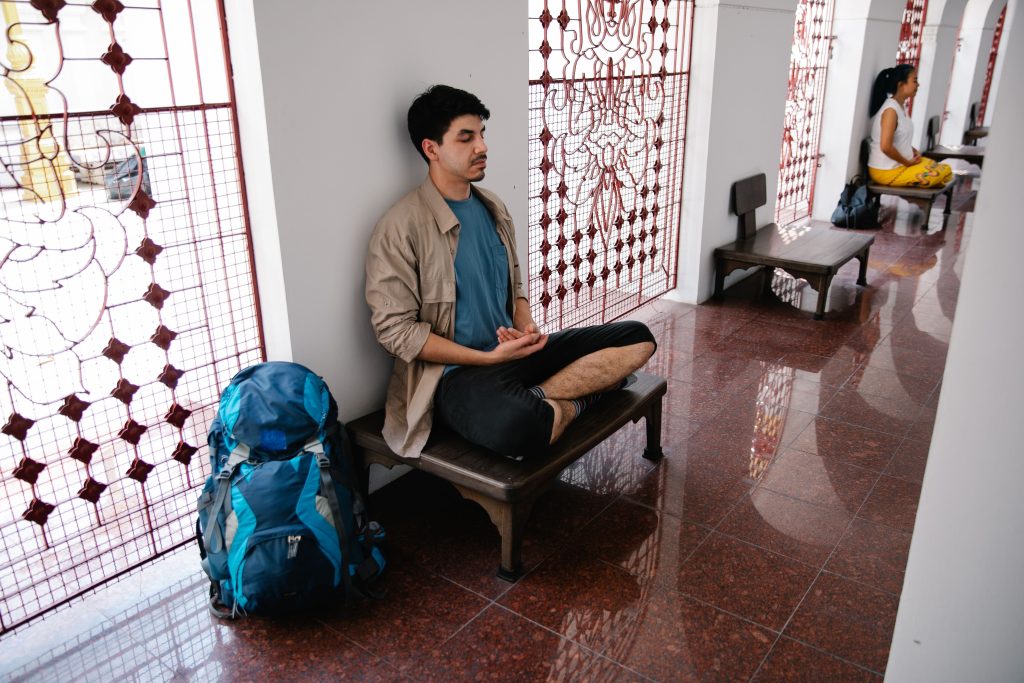
Each seat distributes weight differently. A bench supports kneeling and keeps the hips above the heels. A cushion supports cross-legged, Burmese, or kneeling positions. A chair avoids floor transfer and usually demands less knee and ankle mobility.
| Seat type | Best suited to | Main consideration |
| Bench | People who prefer kneeling | Requires comfortable joint flexion |
| Cushion | Flexible floor sitters | Height and firmness affect hip position |
| Chair | Limited mobility or longer sessions | Seat depth and back support matter |
If you are still deciding between a bench and a cushion, this meditation pillow guide explains how shape, height, and fill affect the way your hips and knees settle.
How to Choose the Right Height and Seat Angle
Height is the key fit variable. A low seat can compress the ankles and deepen knee flexion; a high one may feel unstable. Proportions, flexibility, and mat thickness all influence the result.
Many benches use a slight forward angle. This may help the pelvis settle naturally, although too much slope can create pressure at the front edge. When possible, test a similar height using firm folded blankets before buying, and favor a seller with a practical return policy.
Materials, Padding, and Build Quality
Wood and bamboo provide a firm platform without much bulk. Look for smooth edges, secure joints, even floor contact, and a stated weight capacity above the intended user’s weight.
A bare seat feels compact and easy to clean. A thin removable pad softens pressure while preserving stability, whereas thick plush padding can feel less precise. Washable covers are useful in shared homes, studios, or retreat settings.
Folding or Fixed-Leg Design?
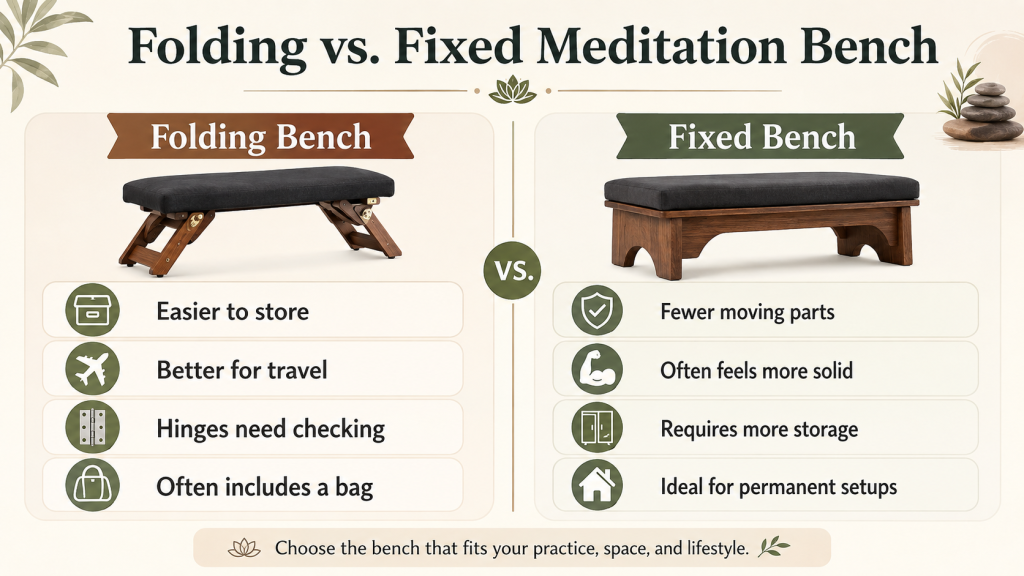
Folding legs suit small apartments and travel because the bench can slip into a bag or closet. Because hinges add moving parts, the legs should open securely and remain steady.
Fixed legs feel solid but require dedicated storage. Let your routine decide. A portable model matters only if it stays stable, while a fixed bench works best when you can leave it ready for practice.
Recommended Meditation Bench Options
These five choices serve different needs rather than repeating one design with minor cosmetic changes.
Waterglider International Meditation Bench (Burgundy), Seiza, Sustainable Acacia Wood with Curved Bottom Edges for the Perfect Posture, Meditation Stool, Prayer Bench, Meditation Chair, Yoga Stool
Best for: A fixed bench for a dedicated practice space
This acacia-wood bench uses curved bottom edges and a fixed form, giving home practitioners a simple seat with room to find a comfortable angle. It suits readers who plan to leave their bench in one practice area. The trade-off is reduced portability and no included cushion.
Yoga Dood Meditation Bench – Folding Bamboo Meditation Stool | Premium Bamboo Construction with Washable Velvet Cushion & Carry Bag, Seiza Prayer Bench, Compact Folding Design
Best for: Travel and an all-in-one setup
This folding bamboo model includes a washable velvet cushion and carry bag, reducing the need to assemble a separate travel kit. It suits retreats, classes, and shared spaces where portability matters. The cushion adds convenience, though people who prefer firm feedback may favor an unpadded seat.
Green Eos Bamboo Ergonomic Folding Meditation Bench – Seiza Bench – Ideal for Vipassana and Transcendental Meditation
Best for: Minimalists who prefer an unpadded seat
The Green Eos bench combines bamboo construction, hinged legs, and a clean cushion-free design. It fits readers who want fewer fabric components and easy storage. Its firm surface may feel stable and uncomplicated, but pressure-sensitive users might prefer to add a thin removable pad.
HOSASSPER Bamboo Meditation Bench, Folding Meditation Stool with Velvet Cushion & Carry Bag, Seiza Prayer Stool, Kneeling Meditation Bench for Yoga, Mindfulness & Zen Practice
Best for: Washable cushioning on a portable frame
This folding bamboo stool includes a removable cushioned cover and carrying bag. The washable fabric suits frequent practice or households where several people share the bench. Its bundled setup is convenient, although the hinged legs should always be opened fully and checked for stability before sitting.
Estleys Bamboo Meditation Bench, Foldable Prayer Stool (Beige) | Meditation Kneeling Bench, Seiza Prayer Bench, Prayer Bench with Meditation Cushion, Kneeling Prayer Stool for Home
Best for: Readers who want thicker seat padding
The Estleys model pairs a foldable bamboo base with a two-inch cushion and machine-washable velvet cover. It may appeal to beginners who find bare wood too firm. The extra padding adds softness, but it also increases effective seat height, which matters when assessing fit.
| Product | Folding | Cushion | Best match |
| Waterglider | No | No | Fixed home setup |
| Yoga Dood | Yes | Included | Travel |
| Green Eos | Yes | No | Firm-seat minimalism |
| HOSASSPER | Yes | Included | Easy-care cushioning |
| Estleys | Yes | Thick cushion | Softer seating |
How to Sit on a Meditation Bench Correctly
Begin on a padded mat. Kneel, place the bench behind you, and lower your sitting bones onto the center. Your calves may rest between the legs or outside them.
Let the seat carry your weight rather than collapsing onto your ankles. Stack the rib cage over the pelvis, soften the shoulders, and rest your hands comfortably. Sharp pain, tingling, or increasing numbness means it is time to change position.
Why a Zabuton or Blanket Still Matters
The bench supports your pelvis, not your knees, shins, ankles, or feet. A zabuton, exercise mat, or firmly folded blanket can spread pressure and soften contact with hard flooring.
The base layer also changes effective seat height. A thick mat may let the knees sink lower, subtly altering the hip angle. Evaluate the whole arrangement together rather than testing the bench on bare flooring. Choose a stable, nonslip layer over a decorative but slippery one.
What Research Says About Meditation Seating and Comfort
Direct research comparing commercial benches remains limited. A 2018 pilot study of meditation seating followed 31 participants during short sessions using a chair, zafu, and bench. All three were considered suitable, while the zafu produced fewer measured postural changes. Its small sample and brief sessions do not establish one universally superior seat.
Broader evidence supports caution rather than a product verdict. A 2023 biomechanical study of floor-sitting postures modeled how reduced lumbar curvature can increase loading in parts of the lower back. A 2014 review of kneeling biomechanics explains how deep knee flexion changes contact pressure and joint mechanics. Neither source tested meditation benches directly, so use these findings to prioritize fit, position changes, and comfort—not as proof that a particular design prevents pain.
The National Center for Complementary and Integrative Health overview says meditation is generally considered low risk, although research on adverse effects remains limited. It cites a 2020 review of 83 studies and 6,703 participants in which about 8 percent reported a negative effect, most commonly anxiety or depression. A supportive seat matters, but so do realistic expectations and appropriate professional guidance.
Common Buying Mistakes to Avoid
The biggest mistake is choosing by appearance before checking height, slope, width, and return terms. A bench that pinches your ankles will become shelf décor. Thicker padding is not always better because too much softness can reduce stability.
Do not ignore hinge quality or leg placement, and never treat a bench as medical equipment. It is a posture aid, not a treatment for knee, hip, or back conditions. Test short sessions first and adjust promptly when discomfort builds.
Cleaning, Storage, and Long-Term Care
Wipe wood or bamboo with a soft, slightly damp cloth, then dry it promptly. Don’t use harsh cleaners or soak the frame. Follow the maker’s care instructions for removable covers because washable fabric may still require low heat or air-drying.
Inspect folding hinges, screws, and leg alignment regularly. Store the bench dry and never pack a damp cushion. Maintenance helps you notice looseness before it affects stability.
Frequently Asked Questions About a Meditation Bench
What height should a meditation bench be?
There is no universal ideal. Lower-leg length, ankle flexibility, knee comfort, mat thickness, and preferred pelvic angle all matter. Compare product dimensions with a temporary setup made from firm folded blankets. You should feel supported without excessive ankle compression, forward sliding, or strain when standing up.
Can beginners use a meditation bench?
Yes. It gives beginners a clear, repeatable kneeling position and may feel easier than cross-legged sitting. Start with brief sessions on a padded floor, learn how to enter and leave the posture safely, and adjust when discomfort builds. A chair remains an equally valid alternative.
Can someone with bad knees benefit from using a meditation bench?
Not automatically. Kneeling requires substantial flexion and may aggravate some conditions. Anyone with persistent pain, injury, swelling, surgery history, or reduced mobility should ask a qualified clinician about suitable positions. Stop if the posture causes sharp pain, numbness, or worsening symptoms.
Do I need a cushion with the bench?
Not always. Some people prefer bare wood for stability, while others need a thin pad beneath the sitting bones. Even without a seat cushion, most users benefit from padding under the knees and ankles. Keep added cushioning firm enough that the bench remains level and predictable.
Can I travel with a folding meditation bench?
Yes, provided its folded size and weight fit your luggage. A carry bag protects nearby items and keeps removable padding together with the frame. After travel, open the legs completely and check the hinges, fasteners, and floor contact. Portability should never replace stability.
Final Recommendation: Choose Fit Before Features
The right meditation bench should support a steady kneeling posture without making you negotiate with your knees, ankles, or balance. Start with height and seat angle, then compare padding, leg design, width, and storage needs. Travelers may prefer the Yoga Dood package with its cushion and bag, while minimalists may appreciate the unpadded Green Eos. Estleys better suits readers who prioritize softness.
Whichever model you choose, use it on a padded, nonslip surface and begin with short sessions. You should feel supported, alert, and free to adjust. Choose the bench that fits your proportions and routine—not simply the one with the longest feature list.