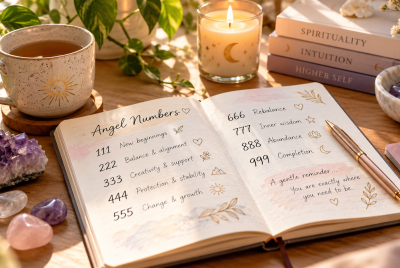
How To Cleanse Crystals On A Full Moon
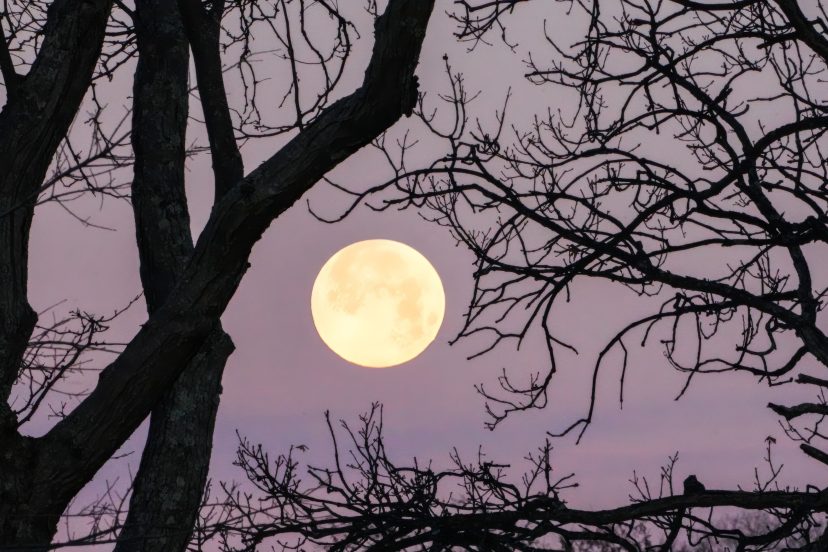
We may earn a commission for purchases made using our links. Please see our disclosure to learn more.
Want to refresh your favorite crystals but aren’t sure whether to leave them outside, use water, or wait for a perfectly clear sky? Learning how to Cleanse Crystals On A Full Moon is straightforward when you separate spiritual ritual from practical stone care. For many enthusiasts, a full moon marks a fresh start. You need no special equipment. A single stone and a few peaceful minutes can be enough for a thoughtful monthly reset. Below, we’ll walk through the timing, safe placement, step-by-step process, and common mistakes. We’ll also cover delicate stones, indoor alternatives, and useful accessories without overstating claims about crystal energy.
What Does Full Moon Crystal Cleansing Mean?
In crystal traditions, cleansing means symbolically releasing unwanted energy or previous intentions associated with a stone. Charging is different: it’s the act of dedicating the crystal to a new purpose. Full-moon rituals often combine both to symbolize renewal.
These are spiritual interpretations, not proven physical changes to minerals. A crystal can become a reminder of what to release or nurture. Physical dirt requires separate cleaning. Keeping these meanings distinct prevents a meaningful spiritual custom from becoming an unsafe cleaning recommendation.
When Is the Ideal Time to Cleanse Crystals Under a Full Moon?
The evening of the full moon is the easiest choice, but the evening before or after works for a personal ritual too. The exact astronomical instant may occur in local daylight.
Check a reliable lunar calendar in your time zone, then choose a convenient evening. A full moon typically rises near sunset. Choose timing that suits your schedule. A lunar calendar is especially useful if your local full moon falls near midnight or spans different calendar dates.
Which Crystals Can Go Under Moonlight?
Clear quartz, rose quartz, and amethyst can generally sit on a dry, sheltered tray for a short nighttime ritual. Protect them from falls, temperature shocks, and morning sunlight. Extended exposure to strong light can cause amethyst to lose some of its color.
Selenite and satin spar are soft gypsum varieties vulnerable to water and scratches. For turquoise, opal, or delicate jewelry, choose a dry indoor spot rather than risking moisture or rough handling. Keep unidentified stones indoors. Very porous, dyed, glued, or heavily fractured pieces deserve extra caution because moisture can affect more than the mineral itself.
How to Prepare Your Crystals Before the Ritual
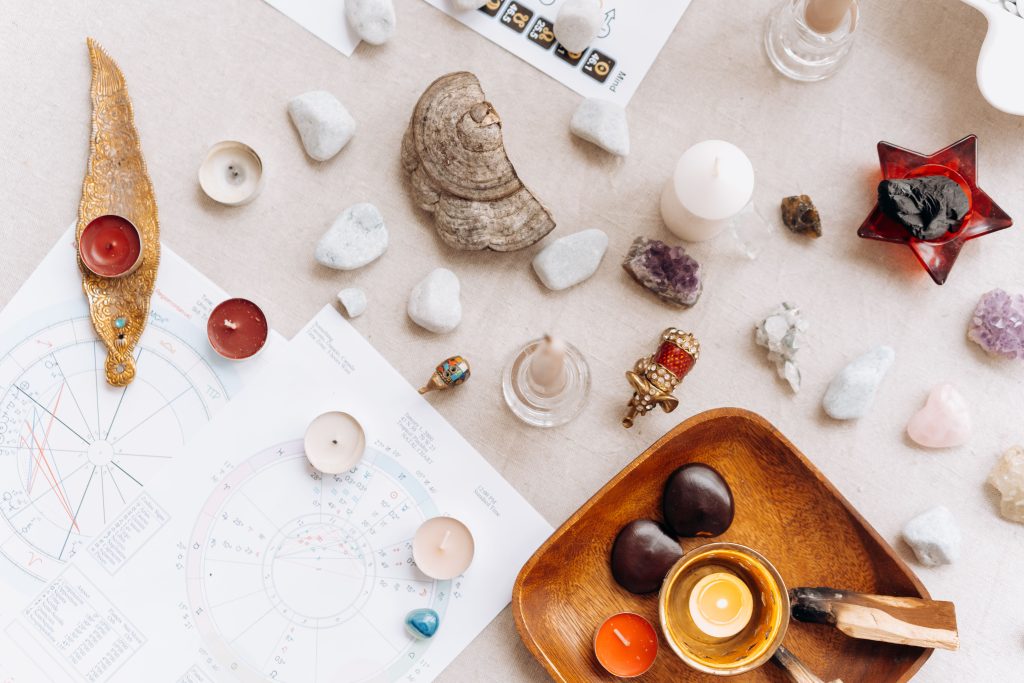
Wash your hands and check for cracks or loose settings. Remove ordinary dust using a clean, soft, dry cloth. Avoid soaking: minerals, dyes, adhesives, and settings vary.
Select a few crystals rather than overcrowding a tray. Prepare a stable surface, a small cloth, and perhaps a notebook. Keep jewelry pieces separated to help prevent tangling and scratching. Set out only what you can safely retrieve later, particularly if you share a space with other people.
How to Cleanse Crystals on a Full Moon: Step by Step
- Choose your spot. Pick a secure, dry windowsill, covered balcony, or sheltered table where stones cannot fall.
- Arrange your crystals. Place them on a clean cloth or tray, separating delicate pieces.
- Pause and reflect. Take several comfortable breaths. Consider what you’re ready to release.
- State your intention. Say something straightforward, such as, “I release what no longer supports me and welcome a fresh start.” Silence works equally well.
- Leave them undisturbed. Leave stones in their safe spot. Bring outdoor pieces inside before rain, heavy dew, or morning sunlight.
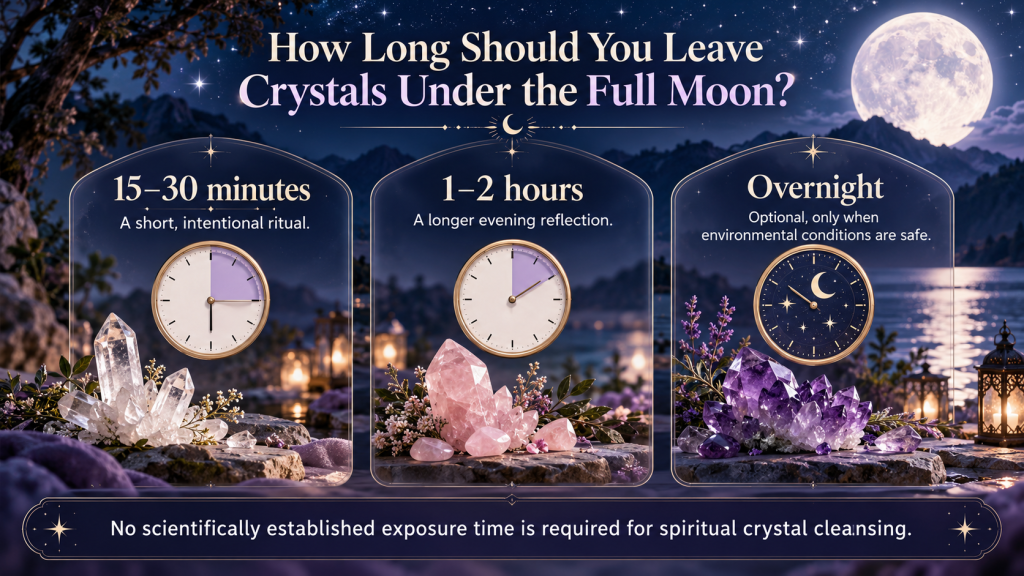
No minimum exposure time is scientifically established. Follow your intentions, not rigid rules.
Where Should You Place Crystals During the Full Moon?
A dry indoor windowsill is often the most convenient place, especially for apartment dwellers. A sheltered porch also works if protected from pets and wind. Direct moonlight is not proven to change mineral properties.
Avoid balcony railings, wet soil, and open garden areas where crystals can disappear or become damaged. Line your tray with cloth. Avoid morning sunlight. If your only available window faces sunrise, plan to remove crystals before sleeping instead of leaving them until breakfast.
How Much Time Should Crystals Spend in Moonlight?
An hour or two is plenty for a brief personal ceremony, and leaving crystals overnight is optional rather than necessary. No exposure duration is scientifically established. Choose a length that fits your routine and preserves your collection.
If you leave a tray overnight, check the forecast and consider condensation, sprinklers, and curious animals. Bringing everything indoors before bed is usually the lower-risk choice. Finish whenever your reflection feels complete.
Can You Cleanse Crystals When the Full Moon Is Cloudy?
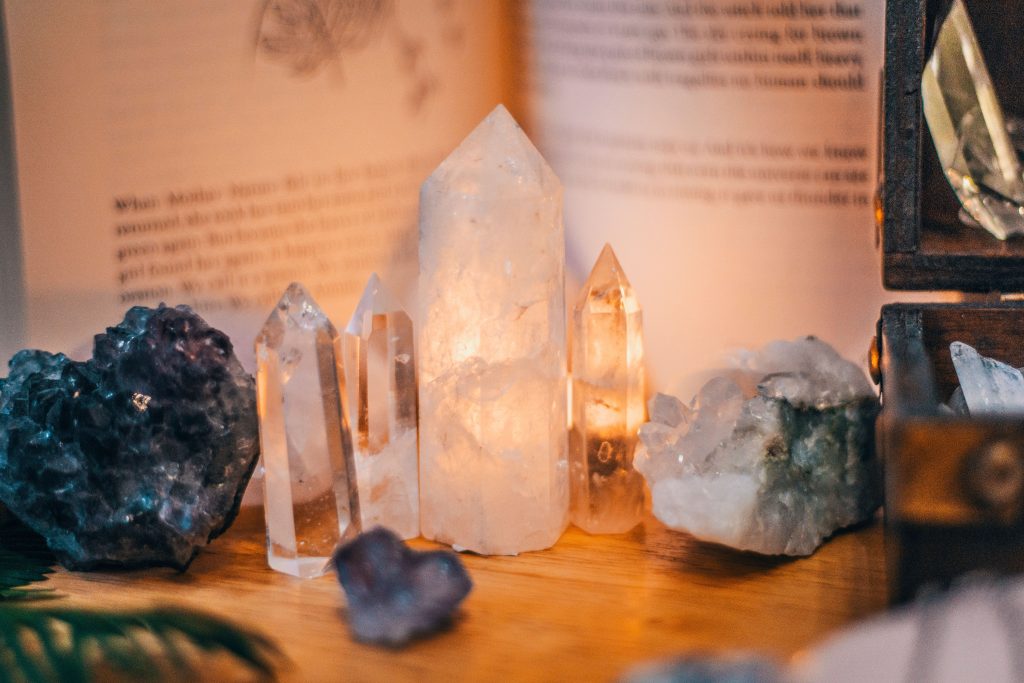
Yes, you can still observe a full-moon ritual when clouds hide the Moon. Clouds don’t change the lunar phase. Many practitioners prioritize timing and intention over visibility.
Keep your crystals indoors when rain or heavy humidity is likely. A windowsill without a moon view, a bedside table, or a quiet meditation space will work for reflection. Never risk fragile specimens in bad weather. An overcast evening can still provide a useful reminder to slow down and take stock of the month.
How to Set Intentions After Cleansing Your Crystals
Once you’re ready to finish, hold one crystal and choose a specific intention you can act on. “I’ll journal before bed” is more actionable than wishing for better energy. Write it down beside the stone.
You might associate rose quartz with kindness or clear quartz with clarity, but those meanings are personal and traditional. These aren’t measurable powers. Review your progress next month. Pairing the crystal with a repeatable action is more useful than expecting the stone alone to change your circumstances.
Common Full Moon Cleansing Mistakes to Avoid
Don’t confuse symbolism with mineral care. Saltwater, soaking, harsh detergents, and abrasive brushes can harm certain stones, coatings, or jewelry settings. Don’t assume every crystal tolerates the same treatment.
Don’t forget crystals outside until midday. Light-sensitive stones can fade with prolonged exposure, while exposed trays may collect moisture. Reject promises that moonlight cures illness or anxiety. Ritual cannot replace proper care. Similarly, never place loose stones where pets or young children might swallow them or knock them down.
Other Ways to Cleanse Crystals Without Moonlight
If the timing doesn’t suit you, try a dry, smoke-free ritual indoors. Hold a crystal while breathing slowly, write a short release statement, or sit quietly with music. These methods avoid heat, smoke, and water.
Some practitioners rest smaller stones on a selenite plate as a symbolic cleansing step. This is a belief, not verified energy transfer. The plate still makes a useful display. You can also skip tools entirely: naming one feeling to release and one action to take is enough.
Recommended Products for a Full Moon Crystal Ritual
These five accessories are optional ritual aids.
Curawood Crescent Moon Wooden Crystal Display Tray, 6 x 3 Inches
Best for: Small collections and narrow windowsills.
This crescent-shaped wooden tray gives a handful of tumbled stones a defined place without taking over your space. Its compact, approximately 6-by-3-inch shape suits a bedside table or shelf as well. Wood is easier to handle than a heavy mineral bowl, but the small footprint won’t accommodate large clusters or oversized pieces.
Wish Well Selenite Charging Plate, 4-Inch Round
Best for: Minimalist altars and a few small stones.
This round gypsum plate offers a compact display for crystals or a piece of jewelry. In spiritual practice, selenite is traditionally associated with cleansing, making the plate a fitting ritual accessory. Its practical limitation is important: gypsum scratches easily and should be kept dry. Use it on a level surface and avoid piling hard, sharp stones on top.
GAF TREASURES Extra Large Selenite Crystal Charging Bowl, 6-Inch
Best for: Grouping several small crystals in one place.
This carved, approximately six-inch selenite bowl provides more contained space than a flat plate, which may help keep loose tumbled stones together. It also serves as a display. Because the material is soft gypsum, however, the bowl isn’t suitable for moon water or outdoor exposure to rain; handle and clean it gently.
MagicFiber Microfiber Cleaning Cloth, 6-Pack
Best for: Dry dust removal before setting out crystals.
These reusable microfiber cloths are designed for delicate surfaces such as lenses and screens, making them a practical choice for lightly dusting smooth, sturdy stones and suitable jewelry. A six-pack lets you keep one separate for your collection. Avoid dragging trapped grit across polished surfaces, and don’t use a dry cloth to scrub fragile, flaky, or rough specimens.
Moonology: Working with the Magic of Lunar Cycles by Yasmin Boland
Best for: Readers who want more structure for moon rituals.
Yasmin Boland’s paperback explores lunar phases through an astrology-centered, spiritual lens. It’s useful for finding journaling prompts and a framework for full-moon reflection beyond crystal placement. Its interpretations are spiritual, not evidence that moonlight changes crystals. It’s a companion for ritual planning, not mineral-care instruction.
What Science Says About Moonlight and Crystal Energy
According to NASA’s explanation of Moon phases, moonlight is reflected sunlight, and the lunar cycle changes our view of the illuminated Moon. Astronomy establishes when a full moon occurs; it doesn’t establish that moonlight removes negative energy from gemstones.
A 2025 randomized study published in CNS Spectrums compared rose quartz with visually matched placebo stones among 138 adults. Reported anxiety improvements appeared among believers regardless of which stone they received; the study did not find a crystal-specific therapeutic effect. It examined anxiety, not full-moon cleansing, so it cannot test every personal ritual experience.
For physical care, the Gemological Institute of America’s amethyst guidance confirms that some amethyst colors fade with prolonged intense light. Enjoy the ritual, but follow material-specific care.
Frequently Asked Questions About Cleansing Crystals on a Full Moon
Can I cleanse crystals on the night after the full moon?
Yes. The evening after the full moon is a reasonable choice for a symbolic cleansing ritual, especially if your schedule or weather prevents doing it on the exact date. It will look nearly full. No hour has a demonstrated cleansing effect. Choose what is convenient.
Do crystals need direct moonlight through a window?
No. Direct moonlight isn’t scientifically necessary to clear energy from a crystal, and many practitioners consider indoor placement sufficient for the symbolic ritual. A secure windowsill may make the experience feel connected to the Moon, but a safe table works too. Keep specimens dry instead of chasing direct light.
Is moon water safe to use with all types of crystals?
No. Water can damage some minerals and can affect dyes, adhesives, and jewelry settings. Selenite and satin spar are gypsum varieties and should not be soaked. Sturdy stones need no soaking either. For moon water, keep crystals outside the container. Don’t drink crystal-infused water.
Should I cleanse new crystals before using them?
You can, if it helps mark the beginning of your relationship with a new stone. First inspect the item and remove dust with a material-appropriate method, then choose a simple intention-setting practice. No physical cleansing requirement has been established. If it’s valuable, treated, or unidentified, avoid water, salt, smoke, and extreme temperatures.
Can I cleanse crystal bracelets and necklaces under a full moon?
Yes, as a symbolic practice, provided you protect their metal settings, strings, finishes, and stones. Lay each piece on a soft, dry surface indoors and keep chains untangled. Avoid leaving jewelry outdoors where moisture or loss is possible. For cleaning, follow the most delicate material’s requirements.
Final Thoughts: A Safe and Simple Full Moon Ritual
To Cleanse Crystals On A Full Moon, you only need a few chosen stones, a protected place to set them, and a moment to reflect on what you’re ready to release. Choose the full-moon evening or a nearby night, handle each mineral according to its care needs, and don’t feel pressured to leave anything outdoors until sunrise.
A Curawood wooden tray is a practical starting point for small collections, while a MagicFiber cloth helps with gentle dry dusting before your ceremony. Neither is essential or confers proven powers. Treat the process as a personal ritual that encourages reflection, with sensible handling that keeps your collection beautiful. Start indoors, keep things dry, and follow your intention rather than a timer.