
How To Protect Your Energy As A Sensitive Person

We may earn a commission for purchases made using our links. Please see our disclosure to learn more.
If you’ve ever walked into your own home and still felt tense, overstimulated, or weirdly tired, you’re not being dramatic. Some spaces look fine on the outside but feel noisy on the inside. That’s why learning how to Protect Your Energy at home matters so much, especially if you’re sensitive to clutter, harsh lighting, noise, strong scents, or other people’s emotional leftovers.
This guide will help you create a home that feels softer, calmer, and more supportive without turning your space into a crystal shop or a museum where nobody can sit down. Think of it as decorating for your nervous system, not just your eyes.
Affiliate note: This article includes a few product suggestions that may earn a commission at no extra cost to you.
Why home can drain you even when nobody is there
A home can hold tension in sneaky ways.
Sometimes it’s the pile of unopened mail by the door. Sometimes it’s bright overhead lighting that feels like an interrogation room. Sometimes it’s a room that technically matches but still makes your shoulders creep up toward your ears.
If you’re a sensitive person, your space is not just background scenery. It’s part of your daily emotional weather.
What “protect your energy” really means
Protecting your energy does not have to mean being mysterious, dramatic, or unavailable.
It can simply mean making your home support you instead of constantly pulling at you. It means creating visual calm, building gentle routines, limiting sensory overload, and giving yourself a place where your mind can unclench.
That’s the goal: less internal static, more room to breathe.
Start with an honest room scan
Before you buy anything, pause and look around.
Ask yourself:
- What in this room makes me feel calmer?
- What in this room makes me feel rushed, irritated, or heavy?
- What do I keep ignoring because I’ve gotten used to it?
That last question matters. You can get so used to an energy-draining corner that it disappears into the wallpaper. Meanwhile, your body still notices.
Declutter the spots that make your shoulders tense
You do not need to become a minimalist monk.
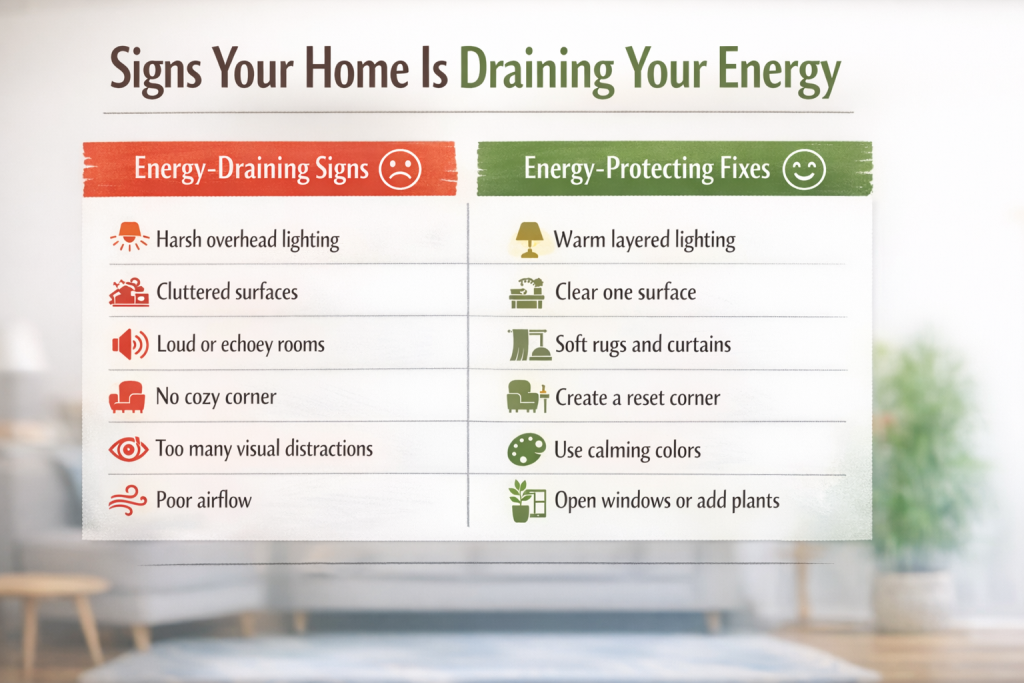
But you do want to clear the areas that create low-grade stress every single day. Start with the places your eyes hit first: the entry table, kitchen counter, bedside table, bathroom sink, and the chair that has somehow become a part-time laundry mountain.
Think of clutter like too many browser tabs open in your brain. One tab is fine. Twenty-seven tabs? Now your soul has a loading symbol.
Use lighting like an emotional dimmer switch
Lighting changes everything.
Bright overhead light has its place, especially when you’re cooking, cleaning, or hunting for the missing charger cable that vanished into another dimension. But for rest, reflection, and emotional recovery, softer lighting usually feels much kinder.
Try layering light instead of blasting one source:
- a table lamp
- a warm bedside light
- a candle warmer
- a soft hallway glow in the evening
Your home should not feel like noon all day long.
Choose colors that feel like an exhale
Color affects how a room lands on your nervous system.
If you feel overstimulated easily, lean toward shades that feel steady rather than shouty. Soft whites, warm beige, muted greens, dusty blue, clay, oat, mushroom, and gentle browns often create a more grounded feeling than super-bright, high-contrast palettes.
That does not mean your home has to be boring. It just means your colors should whisper a little more than they yell.
Let texture do some emotional heavy lifting
Here’s a quiet trick good decorators know: texture can make a room feel safe.
A space with soft curtains, a cozy throw, a woven basket, a plush rug, and natural-looking materials feels warmer and more human. Texture adds comfort without asking you to fill the room with more stuff.
If color is the mood, texture is the hug.
Create one corner that asks nothing from you
You do not need a whole spa room.
You just need one corner that feels emotionally easy. It could be a chair near the window. Maybe it’s your bedside setup. Maybe it’s a tiny reading nook with a lamp, blanket, and one meaningful object.
The rule is simple: this spot should not hold work, clutter, guilt, or unfinished tasks.
No doom piles. No tax papers. No “I’ll deal with that later” energy.
Be picky about what enters through your front door
Your entry sets the emotional tone of your home.
If the first thing you see is chaos, your body reads that message instantly. Create a small landing zone for shoes, bags, keys, and mail. Add something grounding there too, like a small lamp, a bowl, a tray, or a calming scent.
You’re basically telling your brain, “You’re home now. We can lower the volume.”
Add living elements that make the room breathe
A room feels different when it has something alive in it.
That could be a pothos on a shelf, eucalyptus in a vase, a snake plant by the window, or a simple branch arrangement that brings a bit of nature indoors. You do not need a jungle. One or two thoughtful natural elements can shift the whole feeling of a room.
Sensitive people often need spaces that feel organic, not overly sharp or sterile.

Use scent gently, not aggressively
Scent can be beautiful, but more is not better.
If you’re trying to protect your energy, avoid turning your home into a perfume cloud. Go for soft, simple scents that create calm without overwhelming the room. Lavender, cedar, sandalwood, frankincense, chamomile, and light citrus blends tend to feel grounding for many people.
Use scent like background music, not a marching band.
Lower the noise floor
Some homes are visually pretty but acoustically exhausting.
Hard floors, bare walls, buzzing devices, loud vents, and constant TV noise can keep your body on alert. Add softness where you can: curtains, rugs, throws, upholstered furniture, and fabric shades all help. A white noise or sound machine can also help cover random outside sounds that keep poking at your peace.
Silence is lovely. But soft, controlled sound can be just as protective.
Arrange furniture to create emotional boundaries
Layout matters more than people think.
If your chair faces a messy zone, you’ll keep feeling that mess. If your bed lines up with a visual distraction, your brain keeps tracking it. If your favorite seat is placed in a traffic path, it won’t feel restful no matter how cute the pillow is.
Try arranging furniture so the room feels sheltered, not exposed. Tiny changes can still have a noticeable impact.
Build simple rituals that reset the room
Sometimes the most powerful decor choice is a habit.
Crack a window open for five minutes each morning. Turn on one warm lamp at sunset. Try keeping your phone in a different room for part of the evening. Straighten one surface before bed. Sit quietly for a few minutes with a journal, prayer, or a biblical meditation practice that helps you feel centered.
Rituals tell your body, “We are safe enough to settle now.”
Make your bedroom work harder for your peace
If any room should protect your energy, it’s the bedroom.
This is not the place for harsh light, visual clutter, loud colors, or ten unrelated storage baskets staring at you while you try to sleep. Your bedroom should feel like a soft landing, not a second office.
Keep the basics simple:
- warm lighting
- breathable bedding
- a clear nightstand
- low visual noise
- one calming bedtime cue
When your bedroom feels steady, your whole day usually goes better.
5 Amazon finds that can support a calmer home
ASAKUKI Essential Oil Diffuser 500ml
A great pick if you want gentle scent and softer atmosphere without a lot of fuss. Amazon currently shows it at about 4.4 stars from 68,382 ratings. It has a 500 mL tank, remote control, 7 LED light colors, timer settings, separate mist/light controls, and auto shut-off. Best for bedrooms, reading corners, or anyone who wants a calming ritual that feels low effort.
GODONLIF Candle Warmer Lamp with Timer Dimmable
This is for the person who loves candle ambiance but not open flames. Amazon shows roughly 4.7 stars and 6,088 reviews. It offers dimming, a timer, height adjustment, and a flame-free setup that works well in bedrooms, offices, and yoga spaces. Best for people who want cozy light and scent with less stress.
LEVOIT Core Mini-P Air Purifier
If your energy gets wrecked by stuffy air, dust, pet dander, or lingering odors, this one earns its keep. Amazon’s current listing shows about 4.6 stars from 54,529 reviews and 40K+ bought in the past month. It uses a 3-in-1 filter, includes an aroma pad, and is sized well for bedrooms, desks, and small apartments. Best for sensitive sleepers and anyone who wants the room to feel cleaner, not just look cleaner.
Bedsure GentleSoft Fleece Throw Blanket for Couch Grey
Sometimes protecting your energy is as simple as making your body feel held. Amazon shows this throw at about 4.6 stars with 174.9K reviews. It’s lightweight, plush, and versatile enough for sofas, reading chairs, or the end of the bed. Best for anyone whose nervous system calms down the second they get warm and cozy.
Hatch Restore 3 Sunrise Alarm Clock, Sound Machine, Smart Light
This is a splurge, but it’s smart if your evenings and mornings feel chaotic. Amazon shows about 4.3 stars with 11.7K reviews and 20K+ bought in the past month. It combines a sunrise alarm, sound machine, mood light, and screen-free sleep routine. Best for people who need their bedroom to feel less like a charging station and more like a sanctuary.
What the research says in plain English
A classic 2010 home clutter and stress study found that women who described their homes as more stressful had flatter daily cortisol patterns and more depressed mood across the day, while more restorative home descriptions tracked with healthier patterns. In plain English: your space can quietly affect how your body carries stress.
A 2024 systematic review on light and wellbeing looked at 74 studies and found a small-to-moderate positive effect of light on wellbeing, with a pooled effect size of 0.46 in the meta-analysis. That’s a strong reminder that lighting is not just decor fluff. It shapes how a room feels in your body.
There’s also promising evidence around indoor greenery. A 2023 field study found that adding plants to workspaces improved satisfaction with the space and reduced some health-related complaints, while earlier research found that interacting with indoor plants can reduce psychological and physiological stress.
FAQs
How can I protect my energy at home without buying anything?
Start by clearing one stressful surface, turning off harsh overhead lights in the evening, opening a window, and creating one calm corner that stays clutter-free. Small shifts often work better than a dramatic makeover.
What colors help a sensitive person feel calmer?
Soft, muted colors usually work best. Warm whites, beige, muted green, dusty blue, clay, and mushroom tones often feel gentler than bright, high-contrast shades.
Do indoor plants really help a room feel less stressful?
For many people, yes. Even one or two plants can make a room feel softer, fresher, and more grounded. You do not need a full indoor garden for that effect.
How do I protect my energy when I live with other people?
Focus on what you can control. Make your bedroom or one small corner your reset zone. Use a tray, lamp, scent, blanket, or sound machine to create a clear emotional boundary inside a shared home.
What is the fastest way to reset the energy of a room?
Open the curtains, crack a window, remove visible clutter from one surface, turn on a warm lamp, and put on a calmer scent or softer sound. Five minutes can change the whole mood.
Final thoughts
Protecting your energy at home is not about perfection. It’s about relief.
Your home does not need to impress strangers on the internet. It needs to help you feel steadier, safer, and more like yourself. So start small. Clear one surface. Soften one light source. Build one calming ritual. Create one corner that feels like an exhale.
That’s how a draining house slowly becomes a healing one.