Different Tarot Spreads: How to Choose the Right One

We may earn a commission for purchases made using our links. Please see our disclosure to learn more.
You sit down with your tarot deck, shuffle the cards, and then your brain suddenly decides to leave the room.
Do you want to draw a single card? Three cards? A full Celtic Cross? Do you need candles, incense, moon water, crystals, and a velvet cloth that makes your coffee table look like a tiny mystical stage?
Not really.
Learning different tarot spreads is not about making tarot more complicated. It is about choosing a layout that fits the question in front of you. Some spreads are short and simple. Others help you look at a situation from several angles when your thoughts feel tangled.
In this guide, you’ll learn how common tarot card layouts work, when to use them, and how to choose a spread that feels clear, grounded, and useful.
What Are Different Tarot Spreads?
Tarot spreads are the layouts you use when placing cards for a reading. Each card position has a purpose. One card might represent the past. Another might show the challenge. Another might point toward advice, energy, or a next step.
Think of a tarot spread like a gentle conversation guide. Without one, a reading can feel scattered, like too many thoughts trying to talk at once. With a spread, each card gets a role. It knows where it belongs and what part of the story it is helping you understand.
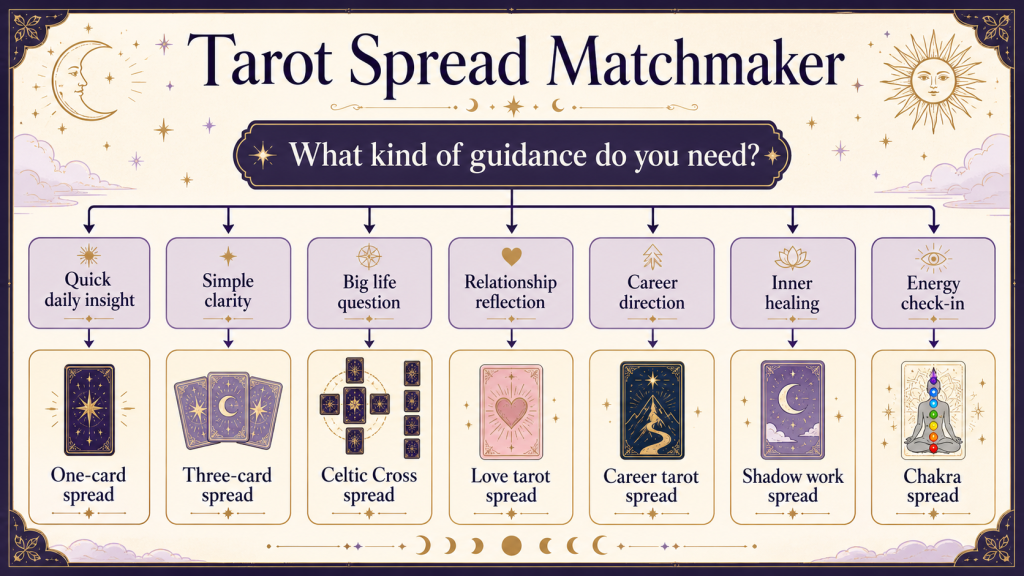
Some tarot spreads are very simple. A one-card pull can give you quick guidance for the day. A three-card tarot spread can show the flow of a situation. A Celtic Cross spread goes much deeper and can explore hidden influences, fears, hopes, and possible outcomes.
Ask Better Tarot Questions First
Before you choose a spread, pause and shape your question.
A vague question usually results in a vague response. So instead of asking, “Will everything work out?” try asking something that gives the cards more room to respond.
You could ask:
- “What do I need to understand about this situation?”
- “What energy am I bringing into this choice?”
- “What next step supports my growth?”
- “What am I avoiding right now?”
- “What do you want me to learn from this?”
Better tarot questions do not trap the reading into a yes-or-no answer. They invite insight.
A good question opens the door. The spread helps you walk through it.
Before reading, you may also want to clear your space, take a slow breath, and set an intention. If your energy feels heavy or scattered, simple aura cleansing rituals can help you feel more centered before you pull your cards.
The One-Card Spread for Quick Clarity
A one-card tarot spread is perfect when you need a small lantern, not a stadium light.
It is simple, quick, and surprisingly useful.
Use it for:
- Daily guidance
- Morning reflection
- Emotional check-ins
- Quick spiritual insight
- A simple “what do I need to know?” moment
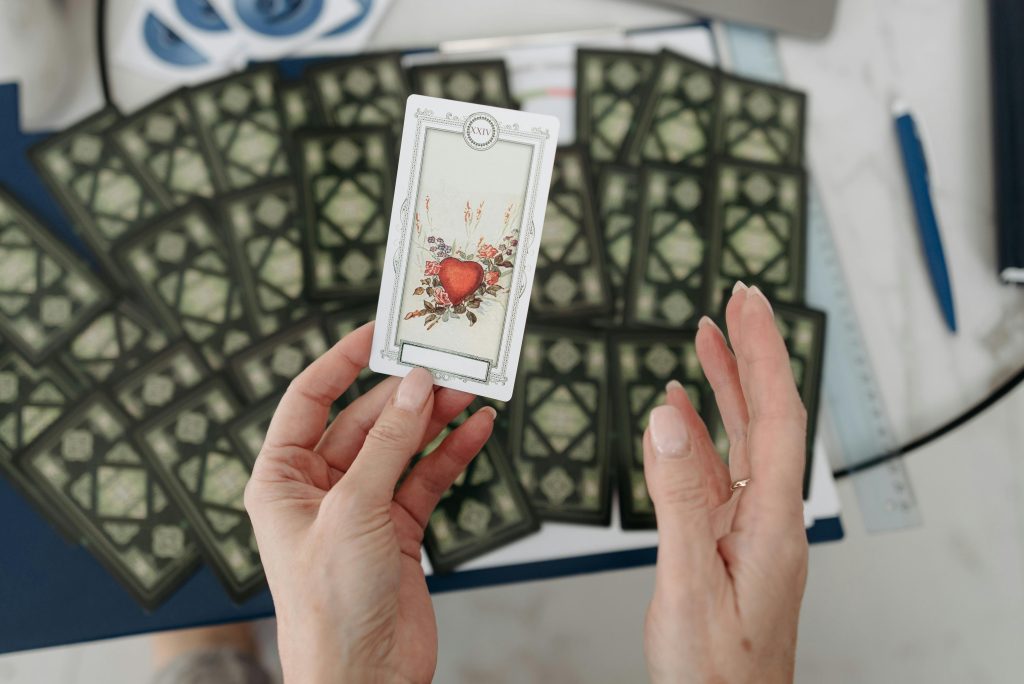
Example One-Card Prompts
You can ask:
- “What energy should I carry today?”
- “What lesson is showing up for me?”
- “What should I focus on right now?”
- “What do I need to hear?”
- “What can help me feel more stable?”
This spread is especially helpful for beginners because it lets you build a relationship with each card slowly. You are not trying to interpret a whole table of symbols at once.
One card. One message. One quiet moment of reflection.
Sometimes that is more than enough.
The Three-Card Tarot Spread for Simple Insight
The three-card tarot spread is one of the most useful layouts you can learn. It is flexible, beginner-friendly, and easy to come back to again and again.
It gives you more context than a single card without making the reading feel overwhelming.
Popular three-card tarot spreads include:
- Past, present, future
- Mind, body, spirit
- Situation, challenge, advice
- You, them, connection
- Problem, lesson, next step
- What to release, what to keep, what to grow
This spread works beautifully when you want a balanced reading but do not need a full deep dive.
Best Use Case
Use a three-card spread when you feel stuck but still have a clear question.
For example, if a situation feels tense, you might pull:
- What is happening on the surface?
- What is happening underneath?
- What can I do next?
That small structure can bring a lot of clarity without making the reading feel too heavy.
The Celtic Cross Spread for Big-Life Questions
The Celtic Cross is one of the most well-known tarot spreads, and there is a reason readers keep coming back to it. It gives you a fuller picture of a situation.
This spread usually uses 10 cards. It can explore the heart of the issue, outside influences, past energy, future possibilities, hidden fears, hopes, and likely outcomes.
It is best for:
- Major life crossroads
- Long-term patterns
- Complicated relationships
- Career uncertainty
- Spiritual growth questions
- Situations with many moving parts
The Celtic Cross is probably not the spread you need for “Should I text them back?” unless you enjoy turning one small question into a full spiritual committee meeting.
But when you are facing something big, layered, or emotional, this spread can be deeply helpful.
The Rider-Waite deck, first published in 1909 with artwork by Pamela Colman Smith, helped shape many of the tarot symbols and interpretations readers still use today.
Love and Relationship Tarot Spreads
Love tarot spreads can be helpful, but they need to be used with care.
The goal is not to spy on someone’s private thoughts. That can get messy fast, like reading someone’s diary and then wondering why the energy feels awkward.
Instead, use relationship spreads to understand your emotions, patterns, needs, and next steps.
Simple Relationship Spread
Try this five-card layout:
- Your energy
- Their energy
- The connection
- The challenge
- The healthiest next step
This spread can work for romantic relationships, friendships, family tension, or even your relationship with yourself.
It can help you ask better questions, such as:
- What am I bringing into this connection?
- What needs more honesty?
- Where do I need stronger boundaries?
- What would love look like here without losing myself?
A good love tarot spread should bring clarity, not obsession.

Career and Purpose Tarot Spreads
Career tarot spreads are useful when your job looks fine on paper, but something inside you keeps whispering, “Is this really where I’m supposed to be?”
You do not have to be in a full career crisis to use one. Sometimes you just need a clearer look at your direction.
Try this five-card spread:
- Where I am now
- What energizes me
- What drains me
- A skill I should develop
- My next practical step
This spread can help you notice what your intuition, values, and inner voice may already be trying to tell you.
Of course, tarot should not replace career planning, financial decisions, or practical research. But it can help you understand your inner landscape before you take action.
Shadow Work Tarot Spreads
Shadow work tarot spreads help you explore the parts of yourself you avoid, judge, hide, or misunderstand.
These spreads can be powerful, but they should be approached gently. You do not need to emotionally bulldoze yourself in the name of healing.
A simple shadow work spread might include:
- What am I avoiding?
- Why does this pattern exist?
- What does this part of me need?
- How can I respond with compassion?
Keep a journal nearby when you use this type of spread. Shadow work can bring up tender memories, old fears, or truths you have been quietly carrying for a long time.
Go slowly. Take breaks. Drink water. Be kind to yourself.
Healing does not have to look dramatic to be real.
Chakra and Energy Tarot Spreads
A chakra tarot spread connects each card with one of the body’s energy centers. Many readers use this type of spread for spiritual self-check-ins.
A seven-card chakra spread may explore:
- Root chakra: safety and stability
- Sacral chakra: creativity and emotion
- Solar plexus chakra: confidence and personal power
- Heart chakra: love and compassion
- Throat chakra: truth and expression
- Third eye chakra: intuition and insight
- Crown chakra: spiritual connection
This spread is especially helpful when you feel “off” but cannot quite explain why.
Maybe your body feels tense. Maybe your emotions feel blocked. Maybe you keep saying yes when your spirit is quietly begging you to say no.
A chakra spread can help you name what needs attention.
How to Create Your Own Tarot Spread
Once you understand tarot spread meanings, you can create your own layouts.
And honestly, this is where tarot starts to feel personal.
Start with three simple questions:
- What do I want to understand?
- What should I let go of?
- What action can I take?
Then assign one card to each question.
That is it. No secret password. No dramatic thunder. No need to wait until Mercury behaves itself.
Custom tarot spreads work well because they fit your real life. They are not copied from someone else’s spiritual kitchen. They are built around your question, your situation, and your inner wisdom.
Recommended Tools for Practicing Tarot Spreads
The Original Rider Waite Tarot Deck
This classic deck is a strong choice for beginners because many tarot books, courses, and guides reference its imagery. The scenes are symbolic, easy to study, and widely recognized.
Features: 78-card deck, traditional symbolism, beginner-friendly artwork.
Best for: New readers learning common tarot card layouts.
Pocket Rider-Waite Tarot
This smaller version is useful if you like doing readings while traveling or if you prefer a compact deck. It uses the familiar Rider-Waite system in a more portable size.
Features: Pocket-size cards, classic meanings, travel-friendly design.
Best for: Daily pulls, small spaces, and readers on the go.
The Weiser Tarot Journal: Guidance and Practice
A tarot journal helps you track readings, notice patterns, and build your own card meanings over time. This one includes guided pages and helpful extras for practice.
Features: Reading pages, prompts, stickers, and reference support.
Best for: Readers who want to grow through reflection.
The Tarot Journal by Peter Pauper Press
This journal gives you space to record spreads, questions, card meanings, and personal notes. Over time, it becomes a record of your spiritual growth.
Features: Guided note-taking pages, illustrated design, space for personal reflection.
Best for: Beginners who want to get better at being consistent.
Tirmanaz Altar Cloth, Velvet Tarot Tablecloth
A printed tarot cloth can help you organize card positions, especially when practicing larger layouts like the Celtic Cross. It also makes your reading space feel more intentional.
Features: Velvet surface, printed layout, decorative design.
Best for: Readers who want more structure and atmosphere.
Research-Backed Perspective on Tarot
Tarot is often seen as a spiritual practice, but many people also use it as a tool for reflection, emotional clarity, and personal meaning-making.
Instead of seeing tarot only as something that “predicts the future,” many readers use it to slow down, ask better questions, and notice patterns they may have missed.
A University of Victoria thesis on tarot cards as a tool for self-reflection found that tarot users often turn to the cards during uncertain or difficult moments. The study suggested that tarot can help people explore their thoughts, emotions, and possible next steps in a more structured way.
A literature review in the Journal of Parapsychology also explored psychological explanations for tarot readings. It looked at how tarot may feel meaningful because people connect the symbols on the cards to their own experiences, emotions, and inner questions.
Interest in tarot is also more common than many people think. According to Pew Research Center’s report on astrology, tarot cards, and fortune tellers, 3 in 10 Americans say they consult astrology, tarot cards, or fortune tellers.
That does not mean tarot should replace therapy, medical care, financial advice, or serious decision-making support. But as a reflective practice, different tarot spreads can help you pause, organize your thoughts, and listen more carefully to what your intuition may already be saying.
FAQs About Different Tarot Spreads
What tarot spread should beginners start with?
Beginners should start with a one-card or three-card tarot spread. These layouts are simple, clear, and easier to interpret without feeling overwhelmed.
What is the recommended number of cards for a tarot reading?
Pull one to three cards for quick insight. Use five to ten cards for deeper questions. More cards do not always mean a better reading. The spread should match the question.
What is the most popular tarot spread?
The three-card spread and the Celtic Cross spread are two of the most popular tarot layouts. The three-card spread is easier for beginners, while the Celtic Cross gives more detail.
Can I make my own tarot spread?
Yes. Choose a clear question, break it into smaller parts, and assign one card to each part. Custom tarot spreads often feel more personal because they are built around your real situation.
Are tarot spreads always accurate?
Tarot spreads are best used for reflection, not guaranteed prediction. They can reveal patterns, emotions, and options, but your choices still matter.