The Perfect Spiritual Morning Routine

We may earn a commission for purchases made using our links. Please see our disclosure to learn more.
Some mornings feel like a tiny stampede. Your alarm goes off, your mind opens 47 tabs, and suddenly you’re answering messages before your soul has even put on socks. A Spiritual Morning Routine gives you a softer way to begin. Not perfect. Not dramatic. Just grounded.
Affiliate note: This article includes Amazon product suggestions you can adapt for your own spiritual self-care space.
What Makes a Spiritual Morning Routine So Powerful?
A spiritual morning routine is not about performing peace like you’re auditioning for a wellness commercial. It’s about meeting yourself before the world starts making requests.
It can include meditation, prayer, journaling, tarot reflection, breathwork, affirmations, or quiet time with tea. The goal is simple: start your day from the inside out.
Consider it similar to adjusting an instrument. You can still play the day without tuning first, but everything sounds a little sharper when you do.
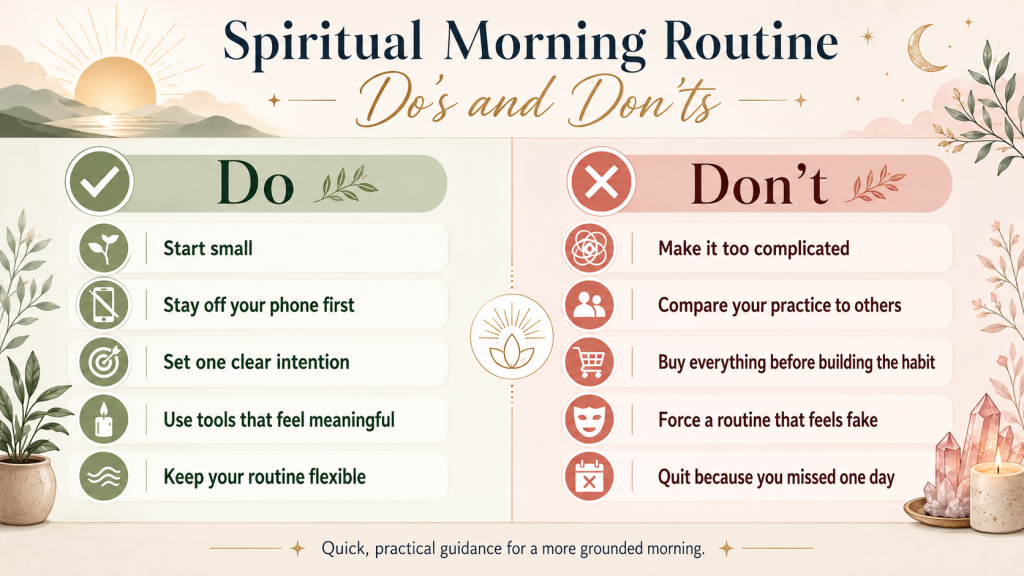
Start Before Your Phone Starts Bossing You Around
Your phone is useful, but it is not exactly a monk. If you grab it first thing, your brain gets pulled into other people’s needs, news, opinions, and perfectly lit breakfast bowls.
Try this instead:
- Keep your phone across the room.
- Avoid social media for the first 20 minutes.
- If necessary, use a real alarm clock.
- Let your first input be breath, light, water, or silence.
This one shift can make your mindful morning ritual feel less rushed and more intentional.
Wake Up With One Grounding Breath
Before you sit up, take one slow breath and ask, “How do I want to arrive today?”
That tiny pause matters. You are telling your nervous system, “We are not sprinting into chaos just yet.”
Try this easy breath:
- Take a four-count breath.
- Hold for two counts.
- Breathe out for six counts.
- Repeat three times.
This is a gentle way to begin a daily spiritual routine without needing candles, crystals, or a dramatic sunrise. Though, yes, a dramatic sunrise is always welcome.
Create a Small Sacred Space
You do not need a full meditation room. A corner counts. A windowsill counts. A chair with a blanket counts. Your sacred space is simply a place that tells your body, “This is where I come back to myself.”
Add simple items like:
- A journal
- A candle or diffuser
- A meditation cushion
- A meaningful photo
- A tarot or oracle deck
- A small plant
- A cup of tea
Keep it uncluttered. A sacred space should feel like an exhale, not another cleaning project.

Set an Intention for the Day
Intention setting is different from a to-do list. A to-do list says, “Buy groceries.” An intention says, “Move with patience while buying groceries, even when someone blocks the entire aisle with one cart.” Spiritual growth, truly.
Try one of these:
- “Today, I choose calm over rushing.”
- “Today, I listen before reacting.”
- “Today, I trust myself.”
- “Today, I make space for joy.”
- “Today, I act with courage and kindness.”
Put it in writing. Say it aloud. Whisper it into your coffee if that feels right.
Practice Morning Meditation
Morning meditation does not need to be long. Five minutes can still change the tone of your day.
Sit comfortably, soften your shoulders, and focus on your breath. When your mind wanders, do not scold it. Minds wander. That is their hobby. Just return to the breath.
A 2025 study on morning meditation and sleep quality found that morning meditation was linked with positive affect, which helped predict end-of-day vitality and mental health-related outcomes among healthcare workers. The study collected data twice daily from 44 employees over five workdays.
Add Prayer, Affirmations, or Mantras
This is where your personal beliefs matter. Your spiritual morning practice can be religious, non-religious, nature-based, ancestral, intuitive, or a blend that feels honest to you.
You might use:
- Prayer for guidance
- Affirmations for confidence
- Mantras for focus
- Scripture or sacred text
- Loving-kindness phrases
- Quiet gratitude
A simple mantra could be: “I am here. I am steady. I am open.”
Repeat it until your body starts to believe you.

Journal for Clarity and Gratitude
Journaling is like sweeping the porch of your mind. You may not clear everything, but you make space to walk through.
Use three prompts:
- What am I feeling this morning?
- What do I need today?
- What am I grateful for right now?
Gratitude journaling works best when it feels specific. Instead of “I’m grateful for my home,” try “I’m grateful for the quiet kitchen light this morning.” Small details make the practice feel real.
Pull a Tarot or Oracle Card for Reflection
A tarot pull can be a beautiful spiritual self-care practice, especially when you use it for reflection rather than prediction.
Ask gentle questions like:
- What energy can support me today?
- What do I need to notice?
- What am I being invited to release?
- How can I show up with more wisdom?
If you want to deepen your card practice, explore these different tarot spreads for self-reflection and choose one that fits your morning mood.
Move Your Body Gently
Your spirit lives in your body, not in a cloud above your inbox. So give your body a little kindness.
Try:
- Neck rolls
- Gentle stretching
- Sun salutations
- A slow walk outside
- Hand-over-heart breathing
- Light dancing while the kettle boils
Movement helps turn your morning spiritual practice from an idea into a full-body experience.
Invite Nature, Light, or Fresh Air
Open a window. Step outside. Touch a plant. Look at the sky before looking at a screen.
Nature has a quiet way of putting life back into perspective. The tree outside does not care about your unread emails. Honestly, very wise of it.
Even two minutes of sunlight or fresh air can make your routine feel more grounded and alive.
5 Products That Support a Spiritual Morning Routine
Product availability and pricing can change, so check the current Amazon listing before buying.
1. The Morning Meditation Journal
Short description: A guided journal designed to help you start the day with reflection and intention. Amazon describes it as including simple exercises to set a positive tone for the day.
Features:
- Morning prompts
- Reflection exercises
- Beginner-friendly format
Best for: Anyone who wants structure instead of staring at a blank page like it personally offended them.
2. Hihealer Meditation Cushion, Traditional Tibetan Zafu & Zabuton Set
Short description: A cushion and mat set for more comfortable seated meditation. The round zafu helps lift the hips, while the zabuton cushions knees and ankles.
Features:
- Zafu cushion
- Zabuton mat
- Posture support
Best for: People who want to meditate longer without their knees filing a formal complaint.
3. The Ohm Store Handcrafted Tibetan Singing Bowl Set
Short description: A 4-inch singing bowl set made for meditation, sound healing, yoga, and relaxation. The Amazon listing says it includes a wooden striker and cushion.
Features:
- Hand-hammered bowl
- Wooden striker
- Small cushion
Best for: Anyone who likes sound-based rituals, energy clearing, or a peaceful “start signal” for practice.
4. ASAKUKI Essential Oil Diffuser for Home, 500ML
Short description: A 500ML aromatherapy diffuser with remote control, LED light options, and cool mist.
Features:
- Large water tank
- Remote control
- 7 LED colors
- Quiet mist
Best for: People who want their sacred space to feel calm, cozy, and lightly scented.
5. Mindfulness Cards: Simple Practices for Everyday Life
Short description: A card deck with 50+ prompts and exercises for mindful moments throughout the day.
Features:
- Portable card format
- Mind-body prompts
- Easy daily exercises
Best for: Beginners who want a quick spiritual practice without overthinking it.
A Simple 20-Minute Spiritual Morning Routine
Here is a realistic version you can actually keep:
- Minute 1: Wake up and take three grounding breaths.
- Minutes 2–4: Drink water and open a window.
- Minutes 5–9: Meditate or pray.
- Minutes 10–13: Journal one feeling, one need, and one gratitude.
- Minutes 14–16: Pull a tarot/oracle card or read a sacred passage.
- Minutes 17–19: Stretch gently.
- Minute 20: Set your intention and begin the day.
No gold stars needed. Just return tomorrow.
Why Your Morning Ritual Can Calm the Mind Before the Day Gets Loud
A spiritual morning routine may feel personal and intuitive, but parts of it are also supported by research. Practices like meditation, mindful breathing, and quiet reflection can help your mind shift from “rush mode” into a calmer, more intentional state.
One large 2021 review in PLOS Medicine looked at mindfulness-based programs across 136 trials and 11,605 participants. The researchers found that mindfulness programs can reduce psychological distress in many non-clinical settings, although they also noted that results can vary from person to person. That is a helpful reminder: your morning practice should support you, not pressure you. Read the full review on how mindfulness practices can support emotional balance.
There is also research that connects morning meditation with better daily well-being. A 2025 study on healthcare workers explored how morning meditation and sleep quality influenced positive emotions, vitality, and mental health-related outcomes across the workday. In simple terms, a few mindful minutes in the morning may help you feel more emotionally steady before the day starts asking for everything at once. You can explore the study on morning meditation and daily emotional resilience.
How to Keep Your Routine Consistent
Start smaller than your ambition. That is the secret.
A 45-minute routine sounds lovely until real life walks in holding laundry, emails, and a mystery appointment you forgot. Begin with five minutes. Then build.
Try habit stacking:
- After brushing your teeth, take three breaths.
- After making coffee, write your intention.
- After opening the curtains, say one affirmation.
Consistency grows when your routine fits your life, not when your life has to bow dramatically before your routine.
Common Mistakes to Avoid
Do not turn your spiritual morning routine into another performance.
Avoid these traps:
- Buying too many tools before building the habit
- Forcing a routine that does not match your beliefs
- Judging yourself for missing a day
- Making it too long too soon
- Comparing your practice to someone else’s online ritual
Your routine should support you, not become a tiny spiritual boss with a clipboard.
FAQ: Spiritual Morning Routine Questions
What is the best spiritual morning routine for beginners?
Start with five simple steps: breathe, drink water, sit quietly, write one intention, and name one thing you are grateful for. Keep it under 10 minutes so it feels doable.
How much time should be spent on a spiritual morning routine?
A good spiritual morning routine can be 5 to 30 minutes. The best length is the one you can repeat without feeling overwhelmed.
Can I create a spiritual morning routine without meditation?
Yes. You can use prayer, journaling, affirmations, tarot reflection, stretching, nature time, or gratitude instead. Meditation is helpful, but it is not mandatory.
What should I write in a spiritual morning journal?
Write how you feel, what you need, what you are grateful for, and what intention you want to carry into the day. Keep it honest and simple.
Is tarot part of a spiritual morning practice?
It can be. Tarot can help you reflect on emotions, patterns, choices, and inner guidance. Use it as a mirror, not as something that steals your power.
Conclusion: Begin Softly, Then Build
The perfect Spiritual Morning Routine is not perfect at all. It is personal, flexible, and deeply human. Some days, it may look like meditation, journaling, tarot, and tea. Other days, it may look like one deep breath before the dog barks, the baby wakes, or your inbox starts tap dancing.
Begin where you are. Choose one practice that feels nourishing. Repeat it gently. Over time, those small sacred moments can become a steady place inside you—one you can return to no matter what the day brings.