5 Signs You’re Under A Spiritual Attack
We may earn a commission for purchases made using our links. Please see our disclosure to learn more.
You know that feeling when life is technically “fine,” but you don’t feel fine? You’re exhausted, but even a full night’s sleep doesn’t reset you. Your thoughts feel loud. Tiny problems feel weirdly intense. And you start wondering, “Is this a Spiritual Attack… or am I just stressed?”
If you’ve been there, you’re not alone—and you’re not crazy.
In this guide, we’re going to talk about Spiritual Attack in a grounded, practical way. You’ll learn what it can look like, what it isn’t, the 5 most common signs, and how to respond without spiraling or turning your life into a 24/7 “battle mode.”
Heads-up: this post includes a small Amazon affiliate-style product section (optional tools only—nothing you need to buy).
What People Mean by “Spiritual Attack” (and what it isn’t)
When people say Spiritual Attack, they usually mean a season where you feel spiritually pressured, distracted, drained, or pulled off-center—like something keeps trying to hijack your peace, your focus, or your connection to God / your higher self / your inner compass.
Think of it like static on the line. You can still hear your truth… but it’s harder to hear it clearly.
What it’s not
A Spiritual Attack is not a label for everything hard.
- It shouldn’t be treated as an alternative to therapy or clinical care.
- It’s not proof you’re “bad” or “cursed.”
- It’s not a reason to fear people, cultures, or everyday life.
A healthy approach sounds like: “Something feels off. Let me respond with wisdom.”
Not: “Everything is a sign and I’m doomed.”
Spiritual Attack vs Anxiety, Depression, and Burnout: How to Tell the Difference
Here’s the most honest answer: sometimes it’s both.
Your spirit and your nervous system aren’t enemies—they’re roommates. If your body is sleep-deprived, overstimulated, or constantly stressed, it can feel like Spiritual Attack because your inner world gets louder and darker.
One quick reality check: the CDC reports that in 2022, the share of adults not getting enough sleep varied by state (roughly 30%–46%). That’s a lot of exhausted brains trying to interpret life correctly.
A simple “discernment” test
Ask:
- Have I been sleeping and eating like a human?
- Have I been under high stress or grief?
- Have I isolated myself?
- Have I lost my usual spiritual anchors?
If the answer is “yes” to several, start with basics and spiritual support. You don’t have to pick a side.
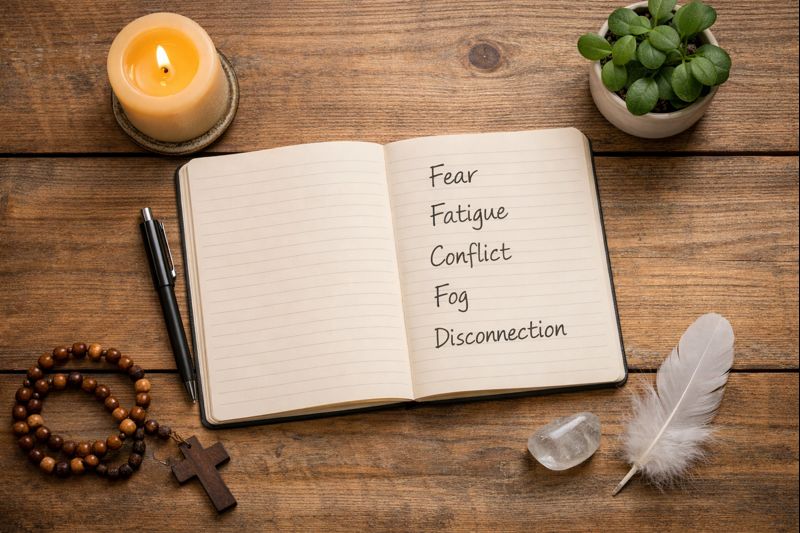
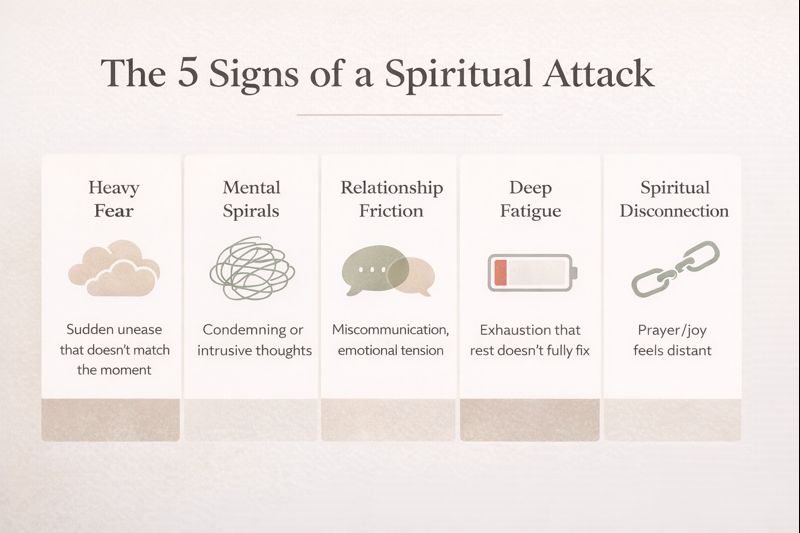
Sign 1: Sudden, Heavy Fear That Doesn’t Fit the Moment
This one feels like:
- Your chest tightens out of nowhere
- You assume the worst instantly
- You feel unsafe even when nothing is happening
It’s like your mind yells, “DANGER!” while your life is quietly sitting in a Tuesday.
What helps
Try this in the moment:
- Put one hand on your chest, one on your belly
- Inhale 4 seconds, exhale 6 seconds (do 5 rounds)
- Say (out loud if you can): “I’m safe right now. I can respond, not react.”
Fear loves urgency. Grounding slows it down.
Sign 2: Spiraling Thoughts and Inner Accusation (the “condemning voice”)
A common Spiritual Attack pattern is mental harassment:
- “You’re failing.”
- “You’re a burden.”
- “Nothing will change.”
- “God is disappointed in you.”
Notice how those statements don’t guide you—they just crush you.
A quick filter: conviction vs condemnation
- Conviction: specific, calm, points to a next step
- Condemnation: vague, harsh, points to shame
If the voice only leads you to hopelessness, don’t treat it like truth.
Sign 3: Unusual Conflict and Miscommunication in Relationships
This one is sneaky. Suddenly:
- You and your partner/friend keep missing each other
- You feel misunderstood all the time
- Little comments sting more than they should
It’s like the emotional “auto-correct” on your phone starts changing every message into an argument.
What helps
Before responding, ask:
- “What did they mean, not what did I hear?”
- “Is this an issue, or am I exhausted?”
Sometimes Spiritual Attack doesn’t show up as a monster—it shows up as friction.
Sign 4: Drained Energy and “Everything Feels Hard”
Yes, tiredness can be normal. But in a Spiritual Attack season, fatigue often comes with:
- fogginess
- dread
- low motivation + high guilt
- feeling “heavy” spiritually
A gentle (but effective) practice
Do one small “restore” action:
- 10-minute walk
- shower + clean clothes
- sunlight on your face
- one protein-heavy meal
- 15 minutes of quiet
Spiritual strength doesn’t float in the air—it rides on your daily rhythms.
Sign 5: Feeling Disconnected From Your Faith, Purpose, or Joy
This sign feels like:
- prayer feels flat
- your usual spiritual routines feel pointless
- you don’t feel love/hope the way you used to
This is often when people panic and try 27 new rituals in one night.
Don’t. Keep it simple.
Tiny connection beats perfect connection
Try:
- one honest sentence to God / your higher power: “Help me stay close.”
- one line of scripture, poetry, or a mantra
- one gratitude thought that’s real (not forced)
In Spiritual Attack seasons, consistency matters more than intensity.

Why It Can Spike After Breakthroughs, Big Changes, or Boundary-Setting
A weird pattern many people notice: the pressure increases when you…
- start healing
- set a boundary
- step into a new job/relationship/path
- stop people-pleasing
- get serious about your goals
It’s like upgrading your life triggers “pop-ups” trying to pull you back into the old version of you.
A reframe I love
Instead of “Why is this happening?” try:
“What is this trying to interrupt?”
That question turns fear into focus.
The “3-Minute Reset” for When You Feel Attacked
When Spiritual Attack energy hits, your job is not to “win.”
Your job is to return to yourself.
Here’s a quick reset:
- Name it: “Something feels off.”
- Breathe: long exhale (calms the body fast)
- Bless your space: “Peace in my mind. Peace in my home.”
- Choose one next step: water, walk, prayer, text a friend
You’re not powerless. You’re just overloaded.
Build Your Shield: Daily Spiritual Protection Practices (that don’t feel dramatic)
Let’s make this practical. A strong “shield” looks boring on purpose.
Morning (5–10 minutes)
- One grounding breath cycle
- A short protection prayer / intention
- One “truth statement” you repeat all day (example: “I am guided. I am protected. I am not alone.”)
Night (5–10 minutes)
- Quick mental cleanup: “What am I carrying that isn’t mine?”
- Gratitude (1–3 things)
- Release: “I let today be finished.”
Small practices done consistently can feel stronger than occasional spiritual marathons.
Clear Boundaries: People, Media, and Energy Drains
Sometimes the “attack” isn’t mystical. Sometimes it’s:
- nonstop doom scrolling
- a group chat that spikes your anxiety
- a “friend” who only contacts you to vent
- content that fuels fear and paranoia
Boundary ideas that still feel kind
- Mute, don’t announce
- Reduce exposure, don’t argue
- Say: “I can’t hold this right now, but I care about you.”
Peace is not passive. Peace is protected.
Cleansing Your Space: Rituals Across Cultures (and doing it respectfully)
Many cultures have some version of cleansing:
- prayer and scripture in Christian homes
- incense in Buddhist/Hindu traditions
- salt, water, and intentional sweeping in folk practices
- herbs and smoke rituals in Indigenous traditions
If you use cleansing rituals, do it with respect and humility:
- don’t treat other people’s sacred traditions like a trend
- understand the meaning, not just the aesthetic
- keep your goal simple: reset the atmosphere, refocus the heart
A simple cleansing that works anywhere
Open a window. Clean one surface. Light a candle. Pray or speak peace.
It’s not about “perfect vibes.” It’s about intentional space.
When to Get Support: Mentors, Clergy, Therapists, and Community
This is important: if you feel unsafe, severely depressed, paranoid, or unable to function, please seek professional help. You can still be spiritual and get mental health support. That’s not a lack of faith—it’s wisdom.
Support options:
- a trusted pastor/imam/rabbi/elder
- a grounded spiritual mentor (not fear-based)
- a therapist (especially trauma-informed)
- community (healthy friends who don’t escalate your fear)
Isolation makes Spiritual Attack feel louder. Safe connection turns the volume down.
Helpful Tools for Prayer, Grounding, and Spiritual Hygiene
These are optional supports—think “training wheels,” not “magic fixes.” I chose items with strong buyer intent and generally solid ratings/review volume on Amazon listings.
1) PURPLE CANYON Smudge Kit (Beginner’s Gift Set)
What it is: A beginner-friendly cleansing kit (sage, palo santo, shell, feather, guide).
Features: All-in-one set, includes instructions, giftable.
Best for: Anyone who wants a simple home reset ritual without guessing what to buy.
2) The Armor of God: Bible Study Book with Video Access (Priscilla Shirer)
What it is: A guided study focused on spiritual warfare themes and daily strength.
Features: Structured lessons, video access, practical application.
Best for: Christian readers who want a steady plan (especially if your mind spirals without structure).
3) The Bondage Breaker®: Overcoming Negative Thoughts, Irrational Feelings, Habitual Sins (Neil T. Anderson)
What it is: A faith-based book that helps you break negative thought patterns and spiritual strongholds with practical, step-by-step guidance.
Features: Scripture-centered framework, clear action steps, widely trusted and heavily reviewed by readers.
Best for: Anyone who feels mentally “harassed” by fear/shame spirals and wants a structured, grounded plan for spiritual freedom.
4) Spantik Himalayan Salt Lamp Bowl with Natural Crystal Chunks
What it is: A warm-glow lamp that many people use to create a calmer, cozier room vibe.
Features: Ambient light, relaxing atmosphere, easy daily use.
Best for: Nighttime wind-down routines, prayer corners, bedside calm.
5) Bholi Sage Plus Sage Smudge Kit (multi-herb sage sticks pack)
What it is: A sage-based cleansing pack designed for home resets and “fresh start” rituals.
Features: Variety of herbs/scents, simple to use, good for occasional resets.
Best for: People who prefer rotating scents or want options for different moods.
Research-Backed Support (Credibility) + FAQs
A Spiritual Attack conversation doesn’t need to fight science. The best approach uses spiritual wisdom + evidence-based calming tools.
What research suggests can help (without claiming it “proves” Spiritual Attack)
- A large systematic review/meta-analysis found mindfulness meditation programs showed moderate evidence of improving anxiety, depression, and pain outcomes. (That matters because Spiritual Attack seasons often show up as stress + spiraling thoughts.) See the study summary on mindfulness meditation programs and psychological stress (Goyal et al., 2014).
- A systematic review in Complementary Therapies in Clinical Practice concluded spiritual/religious interventions seem effective across outcomes including mental health, spirituality, and well-being—suggesting spiritual practices can be supportive when used wisely and ethically. You can read the review overview here: spiritual interventions and mental health outcomes (de Diego-Cordero et al., 2022).
Also—if you’re using reflective tools like oracle cards as part of your spiritual practice (many people use them like journaling prompts), this guide explains it clearly: how oracle cards work (a simple, beginner-friendly explanation).
FAQs
How do I know if it’s a Spiritual Attack or just stress?
If your basic needs (sleep, food, rest, connection) are neglected, stress can mimic a Spiritual Attack. Start with grounding + support. If the heaviness remains even when you’re caring for your body, bring in spiritual guidance and community.
Can a Spiritual Attack cause nightmares and sleep issues?
It can feel that way—especially when anxiety is high. Reduce stimulation at night, avoid fear-based content before bed, and do a short calming ritual (breath + prayer + gratitude). If nightmares are frequent or trauma-related, consider professional support too.
What is the best protection prayer for Spiritual Attack?
The “best” one is the one you’ll actually say consistently. Keep it short: ask for peace, clarity, protection, and wisdom. Repeat it daily, not only when you’re panicking.
Should I do a spiritual cleansing of my home?
If it helps you feel grounded and peaceful, yes—gently and respectfully. Keep it simple: clean, open a window, light a candle/incense if you use it, and speak peace over your space.
When should I talk to a pastor, imam, rabbi, or therapist?
If you feel unsafe, stuck in fear, or unable to function—reach out quickly. Also reach out if you’re isolating, experiencing intrusive thoughts, or feeling hopeless. Wise support doesn’t cancel faith; it strengthens you.
Conclusion
If you’re dealing with a Spiritual Attack, the goal isn’t to become fearless overnight. The goal is to come back to center—again and again—until peace feels normal in your body.
Remember the essentials:
- name what’s happening without panicking
- ground your nervous system
- protect your inputs (people + media)
- stay connected to safe support
- keep your spiritual practices simple and steady
You’re not weak for feeling this. You’re human. And you can get through this with clarity, courage, and a calmer heart.