
How To Raise Your Vibration Naturally

We may earn a commission for purchases made using our links. Please see our disclosure to learn more.
Feeling emotionally heavy can make even ordinary tasks seem harder. You might wake up distracted or wish you felt more connected to yourself. If you’re searching for ways to Raise Your Vibration, you probably want practical habits that bring more peace, clarity, and encouragement into everyday life.
In spiritual communities, a “higher vibration” often describes a more positive or balanced state of mind. It isn’t a measurable energy level, and you needn’t feel cheerful all day. Small changes in how you rest, think, move, and connect with others can make a real difference in how you experience your day. Here’s how to approach the practice naturally, without expensive rituals or pressure to be positive.
What Does Raising Your Vibration Mean?
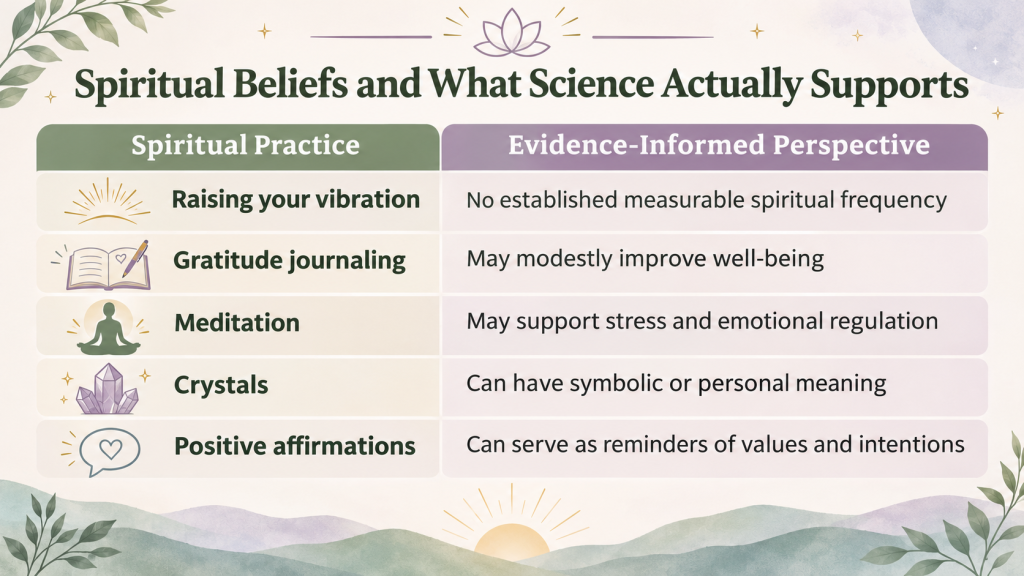
To raise your vibration, in spiritual language, means moving toward feelings such as calm, gratitude, compassion, and purpose. People may associate these qualities with higher-frequency energy, but there is no established scientific test that measures a person’s spiritual vibration.
A practical interpretation is to notice what helps you feel steady and engaged. That might mean recovering after stress or making decisions with greater clarity. You can honor the spiritual meaning while staying realistic about what everyday habits accomplish.
Notice the Habits That Leave You Feeling Drained
Before adding new practices, pay attention to what regularly depletes you. Poor sleep, nonstop notifications, unresolved conflicts, and overscheduled days can create a sense of emotional exhaustion.
Try a brief evening check-in. Write down when you felt most present, when you felt overwhelmed, and what happened beforehand. If scrolling late at night consistently leaves you restless, move your phone away from the bed. If a commitment overwhelms you, consider postponing it.
Start Your Morning With a Gentler Rhythm
Your first few minutes awake can influence your attention. Instead of immediately checking messages, allow a small transition between sleep and responsibilities.
Open the curtains, drink some water, and notice how you feel. Choose an intention such as “I will respond patiently” or “I will focus on one task at a time.” A consistent five-minute routine is more useful than a complicated morning ritual you rarely manage to finish.

Use Mindful Breathing to Return to the Present
Breathing exercises offer a simple pause when your thoughts begin racing. Sit comfortably, relax your shoulders, and follow several natural breaths. Notice the movement of your chest or abdomen without forcing a feeling.
If you’d like a little structure, breathe in gently and let your exhale be unhurried. Stop the activity if you start feeling dizzy or uncomfortable. Some people find breath-focused exercises unsettling; listening to sounds or noticing your feet on the floor works too. The goal is to create room between a feeling and your next response, not to empty your mind.
Practice Gratitude Without Ignoring Difficult Feelings
Gratitude is more meaningful when it reflects something you genuinely appreciate. You don’t need to pretend a difficult situation is wonderful to recognize a helpful friend, a nourishing meal, or a small accomplishment.
Each evening, record one specific moment and why it mattered. “My neighbor checked on me after a stressful day” offers more to reflect on than a vague demand to “be grateful.” Appreciation and disappointment can exist together. This keeps gratitude from becoming another expectation you must meet.
Move Your Body and Spend Time Outdoors
Gentle movement can interrupt long periods of sitting and help you reconnect with your surroundings. Try a walk, easy stretching, dancing while preparing dinner, or a few comfortable yoga poses.
When possible, take the activity outside. Notice changing light, trees, sounds, and the feeling of air against your skin. Even a familiar street can offer a change of scene. Choose a pace that suits your health and mobility; movement should support your well-being rather than become another test of discipline.
Support Your Energy With Sleep and Everyday Care
Sometimes the most spiritual-looking solution is also the most ordinary: getting enough rest. When you’re exhausted, maintaining patience and concentration often becomes much harder.
Keep a regular bedtime and make your bedroom comfortable. Eat regularly, stay hydrated, and take breaks from sustained work. These habits do not increase a proven invisible frequency. They support the physical conditions that make emotional balance easier. If fatigue persists despite adequate rest, seek medical advice rather than assuming your vibration is low.

Choose Relationships and Boundaries That Feel Supportive
The people around you can influence how you feel, but dividing everyone into “high-vibration” and “low-vibration” categories is rarely helpful.
Pay closer attention to patterns of respect, kindness, and reciprocity. Spend time with people who listen and allow you to be yourself. Where interactions repeatedly leave you distressed, practice a clear boundary: “I can’t discuss this tonight,” or “I need time to think.” You can show compassion without being available for every demand.
Use Affirmations That You Can Actually Believe
Affirmations work best as reminders of values and choices, rather than promises that thoughts alone control events.
Replace “Everything in my life is perfect” with “I can take one useful step today.” Instead of “Nothing can upset me,” try “I can respond with care when things go wrong.” Say your phrase before a challenging task, then connect it to an action. Affirmations are prompts for behavior, not proof that wishing will change external circumstances.
Create a Spiritual Ritual With Personal Meaning
Prayer, reflective reading, meditation, and symbolic objects can bring intention to a routine. Choose something that fits your beliefs instead of copying a ritual because it looks impressive online.
You might safely light a candle or write a question in a notebook. Crystals and incense can be symbolic or sensory additions, but they are not necessary and shouldn’t be treated as proven medical treatments. For more adaptable techniques, explore spiritual grounding exercises for daily balance. A useful ritual leaves you more attentive to real life, not afraid of invisible threats.
Build a Routine That Remains Useful on Hard Days
Doing everything at once creates frustration. Begin with two habits: one that helps you settle, such as mindful breathing, and another that helps you engage with life, such as walking or calling a friend.
Attach them to existing moments. Take a short breathing pause before opening your laptop, or note a meaningful event after brushing your teeth. Review the routine after a week. Keep what genuinely helps and change what feels forced. Some days, the most appropriate practice will be resting or asking for support.
What Research Actually Supports About Mood and Mindfulness
Science has examined several habits associated with feeling calmer and more positive, but it has not established a measurable spiritual frequency that rises with certain emotions. That distinction matters when deciding which claims to trust.
A 2025 meta-analysis of gratitude interventions across cultures reviewed 145 papers involving 24,804 participants from 28 countries. It found small overall improvements in well-being, with unexplained differences between countries. Gratitude may help, but happiness is not guaranteed.
The National Center for Complementary and Integrative Health’s overview of meditation and mindfulness describes evidence of possible benefits for anxiety, depression, and sleep. It also acknowledges that some people experience adverse effects. These approaches can complement everyday self-care, but they should not replace professional treatment when it is needed.
Helpful Products for a Mindful, Higher-Vibration Routine
Products cannot manufacture spiritual energy. The most useful ones simply make practices you already value easier to repeat.
Intelligent Change The Five Minute Journal
Best for: Beginners building a gratitude habit
This guided journal offers short prompts for daily appreciation and reflection, which can help you avoid staring at a blank page. Its structured format suits people who want a repeatable morning-and-evening ritual. It is less flexible than an empty notebook, so choose it if you enjoy prompts rather than completely open-ended writing.
Florensi Meditation Cushion
Best for: Creating a dedicated seated meditation space
The Florensi cushion uses buckwheat-hull filling beneath a soft velvet cover, offering a raised seat for quiet reflection. Its removable cover makes routine cleaning easier, and the rounded design works well in a home meditation corner. It is bulkier than an ordinary travel cushion, and a chair may be more comfortable if floor sitting bothers your joints.
Gaiam Essentials Thick Yoga Mat With Easy-Cinch Strap, 10mm
Best for: Gentle stretching and floor-based movement
This thick, cushioned mat offers a comfortable surface for slow stretches, relaxed yoga, and other floor exercises. The included carrying strap makes storing or moving it more convenient. Its plush construction may feel less stable for balance-heavy poses than a thinner mat, so consider your usual style of movement before choosing it.
MZOO 3D Contoured Sleep Eye Mask
Best for: People bothered by ambient light at bedtime
The MZOO mask has a contoured shape intended to leave room around the eyes while blocking light. It can be a practical addition if streetlights or travel lighting interrupt your bedtime routine. Fit varies by face shape, and an eye mask will not solve persistent sleep problems caused by stress, noise, or medical conditions.
The Power of Now: A Guide to Spiritual Enlightenment by Eckhart Tolle
Best for: Readers exploring presence through spiritual reflection
Eckhart Tolle’s book explores the relationship between attention, thought, and living in the present. Its reflective approach may appeal to readers who want a philosophical companion to meditation or journaling. The writing is spiritual rather than a clinical self-help manual, so treat its ideas as perspectives to consider, not scientifically established explanations of consciousness.
Frequently Asked Questions About Raising Your Vibration
Can you raise your vibration in five minutes?
You can feel more settled in five minutes, although no measurable spiritual-frequency change has been established. Try putting your phone down, relaxing your shoulders, noticing your surroundings, and taking a few comfortable breaths. That pause may help you respond patiently. It is a reset, not an instant cure for stress.
What are the signs that your vibration may be low?
People often use “low vibration” to describe feeling irritable, disconnected, drained, or discouraged. These experiences are not diagnostic signs of an energy level. Consider everyday causes such as poor sleep, illness, grief, or ongoing pressure. If low mood persists or disrupts daily life, speak with a qualified health professional.
Do crystals or sound frequencies raise your vibration?
Crystals and particular sounds can hold personal or spiritual meaning, but reliable evidence does not show that they raise a person’s invisible vibration or cure illness. You might enjoy a stone as a reminder to pause, or gentle music as a relaxing background. Choose what feels pleasant and safe without relying on claims about special healing frequencies.
Can negative emotions lower your vibration permanently?
No evidence shows that anger, sadness, or fear permanently lowers a spiritual frequency. Difficult emotions are normal responses to real experiences and often carry useful information. Notice what the feeling might be telling you, then decide what support or action you need. Trying to suppress every uncomfortable emotion may leave you less able to address its cause.
Do you need to meditate every day to feel more positive?
No. Daily meditation suits some people, but it is not essential for emotional well-being or spiritual growth. Walking, prayer, creative activities, supportive relationships, and adequate rest can all be meaningful alternatives. If meditation feels helpful, begin with a short, comfortable practice. If it increases distress, try an eyes-open grounding activity or another approach instead.
Conclusion: Raise Your Vibration Through Everyday Choices
To Raise Your Vibration naturally, focus on practices that bring you back to yourself: rest, mindful attention, gratitude, movement, supportive relationships, and honest reflection. These habits can improve your day without requiring you to deny difficult emotions or believe in scientifically unproven energy claims.
Start with the easiest change to maintain. The Five Minute Journal may help if you enjoy guided reflection, while a comfortable cushion can make a quiet practice more inviting. Neither is essential; a few minutes of attention and a simple notebook can work just as well.
For the coming week, choose one grounding habit and one activity that helps you feel connected. Keep them realistic, notice their effects, and adjust without judging yourself.