
Types of Meditation: How to Choose a Practice That Fits You
We may earn a commission for purchases made using our links. Please see our disclosure to learn more.
Meditation can sound deceptively simple: sit down, quiet your mind, and somehow feel calmer. Then you discover dozens of techniques, unfamiliar terms, spiritual traditions, apps, cushions, mantras, and breathing instructions. If you are wondering which practice actually suits you, understanding the main types of meditation makes the choice much easier.
Some methods train attention. Others cultivate compassion, body awareness, movement, visualization, or spiritual reflection. You do not need to master all of them, and you do not need a perfectly silent mind. This guide explains how eight common approaches work, who may enjoy each one, what research can—and cannot—tell us, and which simple tools can make practice more comfortable. By the end, you should have a clearer starting point without turning meditation into another task to perfect.
Understanding What Meditation Is
Meditation is a family of practices, not one technique. You might focus on breathing, repeat a phrase, observe thoughts, scan bodily sensations, walk slowly, visualize, pray, or cultivate compassion.
Different types of meditation ask different things of your attention. A restless sitter may prefer walking; someone overwhelmed by thinking may appreciate a breath anchor. Instead of asking which method is “best,” ask which one you can practice consistently and comfortably.
Mindfulness Meditation: Learning to Notice Without Chasing
Mindfulness meditation trains you to notice present-moment experience with less automatic judgment. You might follow breathing, sounds, sensations, or thoughts as they arise and pass.
The goal is not to erase thinking. When attention wanders, notice and gently return. That cycle is the practice. Among the most studied types of meditation, mindfulness is flexible, though a busy mind may initially feel more obvious rather than quieter.
Focused-Attention Meditation: Giving the Mind One Home Base
Focused-attention practice narrows attention to one object: the breath, a candle flame, a sound, or a physical sensation. When your focus drifts, simply guide your attention back.
This suits people who prefer clear instructions. Start with five minutes. If breath awareness feels uncomfortable, use sound or touch instead. Your anchor is a training tool, not a test of how long you can stay distraction-free.
Loving-Kindness Meditation: Practicing Warmth on Purpose
Loving-kindness meditation, often called metta, uses repeated intentions of goodwill. You can start by directing the phrases toward yourself, then gradually offer them to loved ones, neutral people, challenging individuals, and eventually broader groups.
It can suit readers drawn to compassion, forgiveness, or connection. Avoid forcing warm feelings; the phrases guide attention rather than command emotion. Among the types of meditation, loving-kindness focuses strongly on the attitude you bring to yourself and others.
Mantra Meditation: Using Repetition to Steady Attention
Mantra meditation repeats sounds, words, or phrases as an attention anchor. The repetition may be spoken, whispered, or silent.
Some mantras carry religious or cultural meaning, while others are secular. If you borrow from a living tradition, learn its context. This style can suit people who find silence too open-ended because rhythm gives the mind a clear place to return.
Guided Visualization: Letting Imagery Lead the Practice
Guided visualization uses spoken cues or intentional imagery. You might picture a peaceful place, light, a meaningful intention, or a symbolic spiritual journey.
Because guidance reduces self-direction, this can be one of the more approachable types of meditation for beginners who prefer audio. Choose language that feels grounded. If complex imagery distracts you, simplify the practice to one color, place, or object.
Body Scan Meditation: Moving Attention Through the Body
A body scan moves attention gradually through the body while you notice pressure, warmth, tingling, tension, numbness, or whatever is present without needing to change it.
It is often done lying down, which can suit people who dislike upright sitting. If inward focus feels distressing, shorten the session, keep your eyes open, or switch to an external anchor such as sound. Meditation should not become an endurance exercise.
Walking and Movement Meditation: Stillness Without Sitting Still
Walking meditation brings deliberate awareness into movement. Rather than walking for distance, you notice lifting a foot, shifting weight, stepping, breathing, and the space around you.
It can help if sitting makes you sleepy or restless. Tai chi, qigong, and mindful yoga also combine movement with attention, although each has its own tradition. These types of meditation show that steady attention does not always require a still body.
Spiritual and Prayer-Based Meditation: Making Space for Meaning
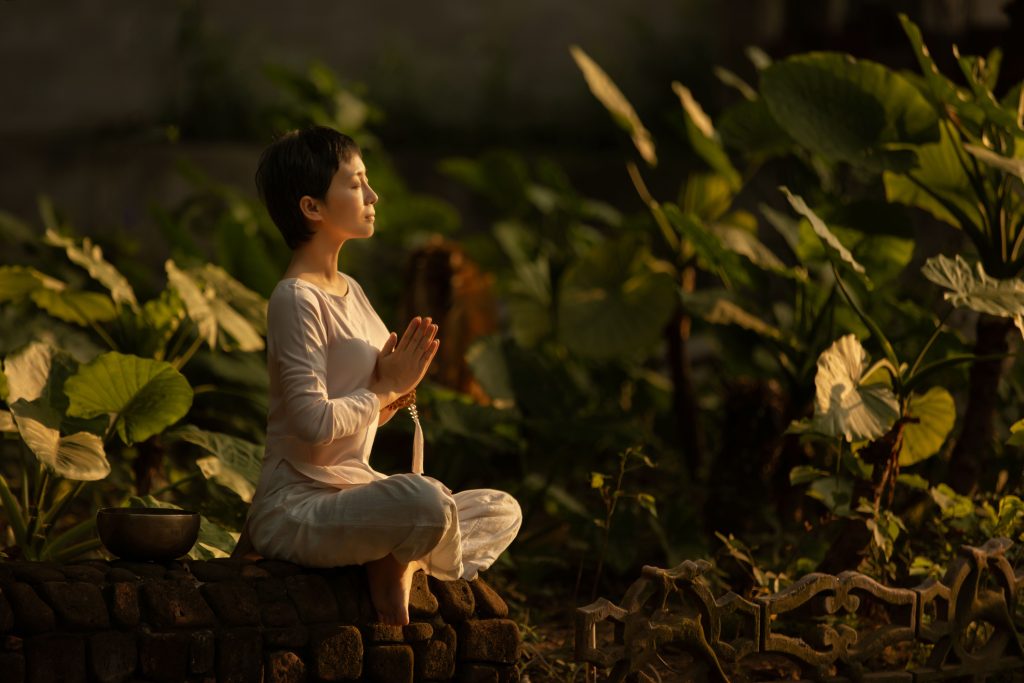
For many people, meditation belongs naturally inside faith or spiritual practice. Prayerful contemplation, sacred reading, silent listening, devotional repetition, and gratitude may all include meditative attention.
Let the structure fit your beliefs rather than copying someone else’s ritual. You might sit quietly after prayer or reflect before journaling. SoulGlowz’s guide to shows how meditation can sit alongside prayer, journaling, or intention-setting without making the morning complicated.
How to Choose Between Different Types of Meditation
Start with your actual life, not an idealized routine. Ask what you want to cultivate: steadier attention, warmth, spiritual reflection, body awareness, or a quiet transition.
Then reduce friction. If you dislike sitting, walk. If silence feels vague, try guidance or mantra. If faith is central, contemplation may feel natural. Try one method for a week before judging it; switching among types of meditation daily can make unfamiliarity look like poor fit.
Building a Meditation Habit That Actually Fits Your Day
A clear cue makes consistency easier: after brushing your teeth, before opening your laptop, after lunch, or before bed. Five dependable minutes can teach you more than an ambitious schedule you abandon.
Keep the setup simple. A chair, cushion, bed edge, or quiet outdoor spot can work. Use a timer if clock-checking distracts you. Define success as showing up, not achieving a special state; wandering attention is part of practice.
What Research Says About Meditation
Research supports some meditation-based programs, but it does not show that every technique produces the same effects. The notes possible benefits for anxiety, depression, pain, and sleep while emphasizing that study quality and results vary.
A 2023 of 276 adults found an eight-week mindfulness-based stress reduction program was noninferior to escitalopram on the study’s primary anxiety outcome. Crucially, that was a structured program; a casual meditation video should not be treated as equivalent to clinical treatment.
A 2022 reported small-to-moderate improvements across several mental-health outcomes, but study bias and limited long-term data reduced certainty.
Meditation can also produce unwanted effects. A 2020 estimated an overall prevalence of about 8% across included studies, with anxiety and depression among commonly reported events. If practice consistently increases distress, stop and seek appropriate support rather than pushing through.
Recommended Products for Different Types of Meditation
Special equipment is optional, but a useful prop can reduce physical distraction or create a clear ritual cue. These choices support several types of meditation and different spaces.
| Product | Best fit | Practical strength |
| Florensi Meditation Cushion | Beginners | Buckwheat-filled seat |
| Waterglider Meditation Bench | Kneeling | Angled wooden design |
| Gaiam Yoga Bolster Pillow | Supported practice | Firm cotton fill |
| The Ohm Store Singing Bowl Set | Sound meditation | Bowl, striker, cushion |
| Bean Products Cushion Mat Set | Hard floors | Zafu plus zabuton |
Florensi Meditation Cushion Velvet Floor Pillow with Buckwheat Fill
Best for: Beginners who want a simple floor seat
This round cushion uses buckwheat-hull filling beneath a velvet cover, giving seated meditation a firmer base than a typical decorative pillow. It suits mindfulness, mantra, or breath-focused sessions where a little hip elevation feels comfortable. Buckwheat cushions are relatively firm and weighty, so anyone who wants a soft, sofa-like feel may prefer another option.
Meditation Bench (NAT. White), Seiza, Sustainable Acacia Wood with Curved Bottom Edges for The Perfect Posture, Meditation Stool, Prayer Bench, Meditation Chair, Yoga Stool
Best for: People who prefer kneeling or seiza
This Waterglider bench uses acacia wood, angled legs, and curved bottom edges for a kneeling meditation setup without a cross-legged seat. It stores more compactly than a full cushion-and-mat arrangement. The manufacturer describes it for practitioners up to six feet tall, so taller users should check fit before choosing it.
Gaiam Yoga Bolster Pillow, Supportive Cushion for Restorative Yoga | Firm cotton-filled bolster supports stretching & restorative poses. Carry handle, washable cover, yoga prop.
Best for: Body scans and supported practice
This rectangular bolster has firm cotton filling, a carry handle, and a removable washable cover. It can support knees, the back, or a relaxed seated posture, making it useful when comfort matters more than portability. Its larger shape is versatile for reclining practices but also requires more storage room than a compact cushion or bench.
Tibetan Singing Bowl Set by The Ohm Store with ‘Medicine Buddha’ Engraving — Meditation Sound Bowl and Wooden Striker Handcrafted in Nepal — Spiritual Gift for Women and Men
Best for: Readers who enjoy sound-based ritual
The set includes a four-inch hand-hammered singing bowl, suede-covered wooden striker, and cushion. Its sound can mark the beginning or end of a session or become a listening anchor. The Medicine Buddha engraving gives it a specific spiritual character, which may not suit readers who want an entirely neutral meditation accessory.
Bean Products Meditation Cushion Mat Set – Zafu Floor Pillow Organic Buckwheat Pillow + Cotton Filled Zabuton Prayer Pad – Meditation Pillow Yoga Knee Pad – Made in USA – 14″ Round or 18″ Oval
Best for: Longer sessions on hard floors
This two-piece setup pairs a buckwheat-filled zafu with a cotton-filled zabuton, providing seat height plus padding beneath the knees and ankles. The zippered cotton-canvas construction makes it a fuller setup for regular home practice. That extra floor coverage can be useful, but the set needs more storage space than one cushion.
FAQs About Types of Meditation
What are the main types of meditation?
Common types of meditation include mindfulness, focused attention, loving-kindness, mantra, visualization, body scan, movement meditation, and spiritual or prayer-based practices. Categories overlap, and traditions define them differently. Treat them as useful maps rather than rigid boxes. Start with the method whose purpose and instructions make sense to you.
What type of meditation is easiest for beginners to start with?
Mindfulness with a simple breath or sound anchor is an accessible start, but it is not universally best. Guided practice may suit people who dislike silence, while walking meditation can help restless beginners. Choose a method you can repeat for five to ten minutes and give it several sessions before switching.
How long should I meditate each day?
There is no universal daily dose that guarantees a result. Five to ten minutes can be a practical habit-building start. Research programs may involve longer sessions and professional instruction, so a short home practice should not be assumed to reproduce study conditions. Increase duration gradually if practice remains comfortable and useful.
Is it okay to practice different types of meditation?
Yes. Different types of meditation can suit different moments: focused attention in the morning, walking during a break, and loving-kindness at night. Beginners may learn more by keeping one core method steady for several days. Once it feels familiar, adding another practice makes comparison easier.
Can meditation make anxiety or difficult emotions worse?
It can for some people. Research suggests meditation may sometimes coincide with anxiety, depression, or other unwanted experiences. If a practice repeatedly leaves you more distressed, stop or shorten it instead of forcing yourself through. For significant mental-health symptoms, use meditation as possible support rather than a replacement for appropriate professional care.
Choosing the Types of Meditation That Fit Your Life
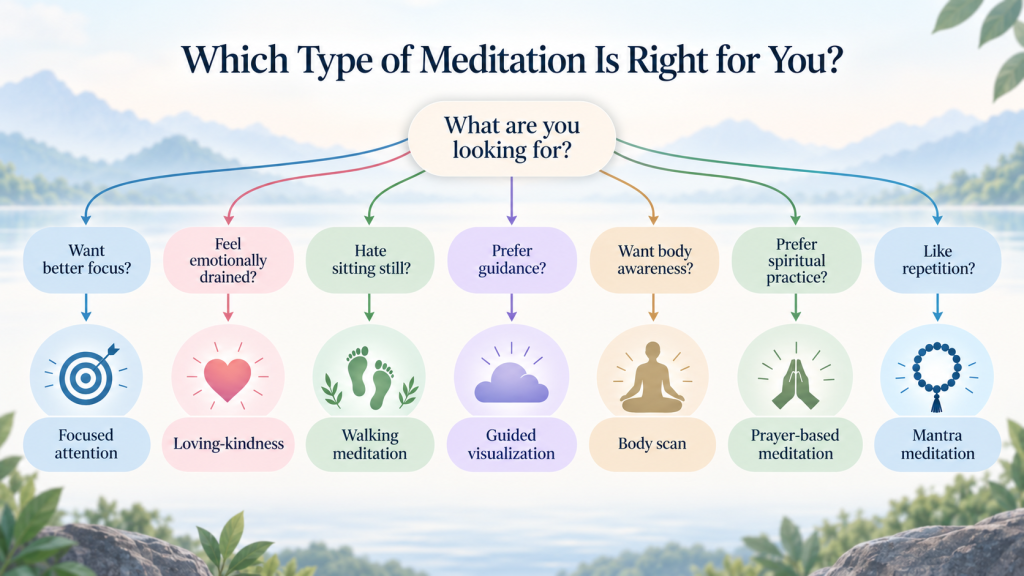
The most useful types of meditation are the ones you can approach with realistic expectations and return to without turning practice into a performance. Choose mindfulness or focused attention for a clear mental anchor, walking if stillness feels uncomfortable, loving-kindness if compassion matters, or prayer-based meditation if spiritual meaning is central.
Equipment remains optional. A Florensi cushion can support basic floor sitting, while the Waterglider bench offers a kneeling option. Start short, keep one method steady, and notice your response. Your next step is simple: choose one practice that fits your body, beliefs, and schedule, then try it consistently for a week.